

Words Remembered, but Struggled to Live
Holy Thursday—The Eucharist as sacrifice, communion, and a way of life
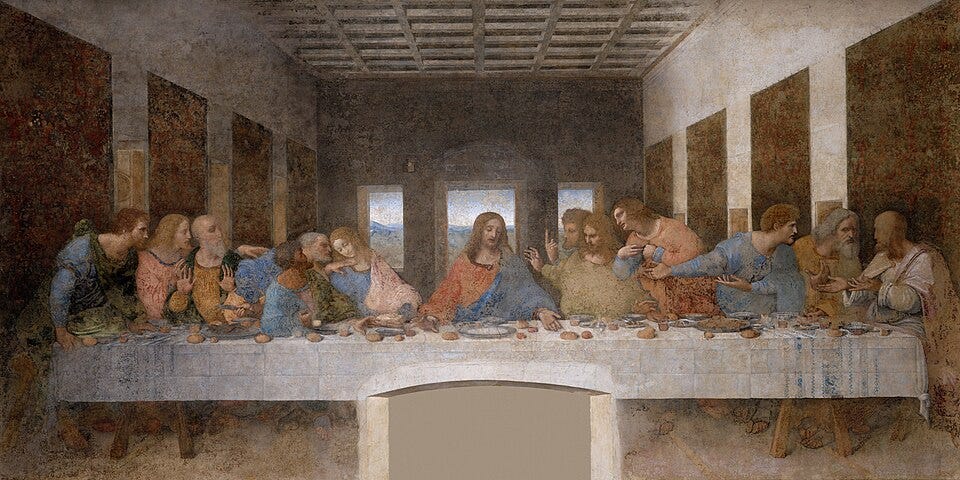
This is the beginning.
The beginning of the seminal celebration of our liturgical year. With this liturgy the Triduum begins.
The ministers of the parish has been planning and rehearsing for this for months.
The choir has learned the music. Altar servers move to where they need to stand. Priests do final checks of rubrics. Lectors go over the words again. Missals are marked and ready. And still, there is a quiet. A quiet that is marked by anxiety and an uncertainty that is hard to name.
For most parishes, this quiet is not so much about what they are about to partake in. Rather, it is the quiet question of why are they partaking in it? Or, what is actually happening?
These words will be spoken clearly, “This is my body. This is my blood.” As they have been said countless times prior. But today, they will land will a familiarity that should be in some ways, confounding.
The liturgy today will refuse to let the human heart and mind look at the Eucharist as anything else other than what Christ Himself said. Not an idea.
The very roots of this celebration in the night are that of urgency. For in Passover, there is nothing casual. Lambs are chosen carefully, blood is placed deliberately, the meal is eaten standing with staffs in hand. For the Jewish people, this is not a symbolic memory. It is participation in their deliverance from the land of Egypt.
Christ, working in the same pattern—not breaking it, takes bread, gives thanks, breaks it, and says the words of institution that will change the world forever. As Lord, He does not change His peoples story, He works inside it. It is the bread of the new and eternal covenant. Promised to His people, all people, since the time of Abraham and prefigured time and time again prior.
With this, the covenant of Exodus is not abandoned, but fulfilled. The lamb has become a man. The blood dawns not the doorposts, but becomes drink. The meal before freedom becomes eternal freedom and communion with God.
And Christ commands finally, that these actions be done in memory of Him. For this action, though set in time and space, is for all peoples to partake in. This commandment was never, “think about me” or “feel this”, but “do this.”
Here, we come back to the liturgy of today. Particularly for those of us who serve as ministers today. Because the Eucharist is a mystery inexhaustible in scope and still precise in compass. The Eucharist cannot be altered. Christ eternally. The letter to the Corinthians makes this strikingly clear:
“As often as you eat this bread and drink this cup, you proclaim the death of the Lord.”
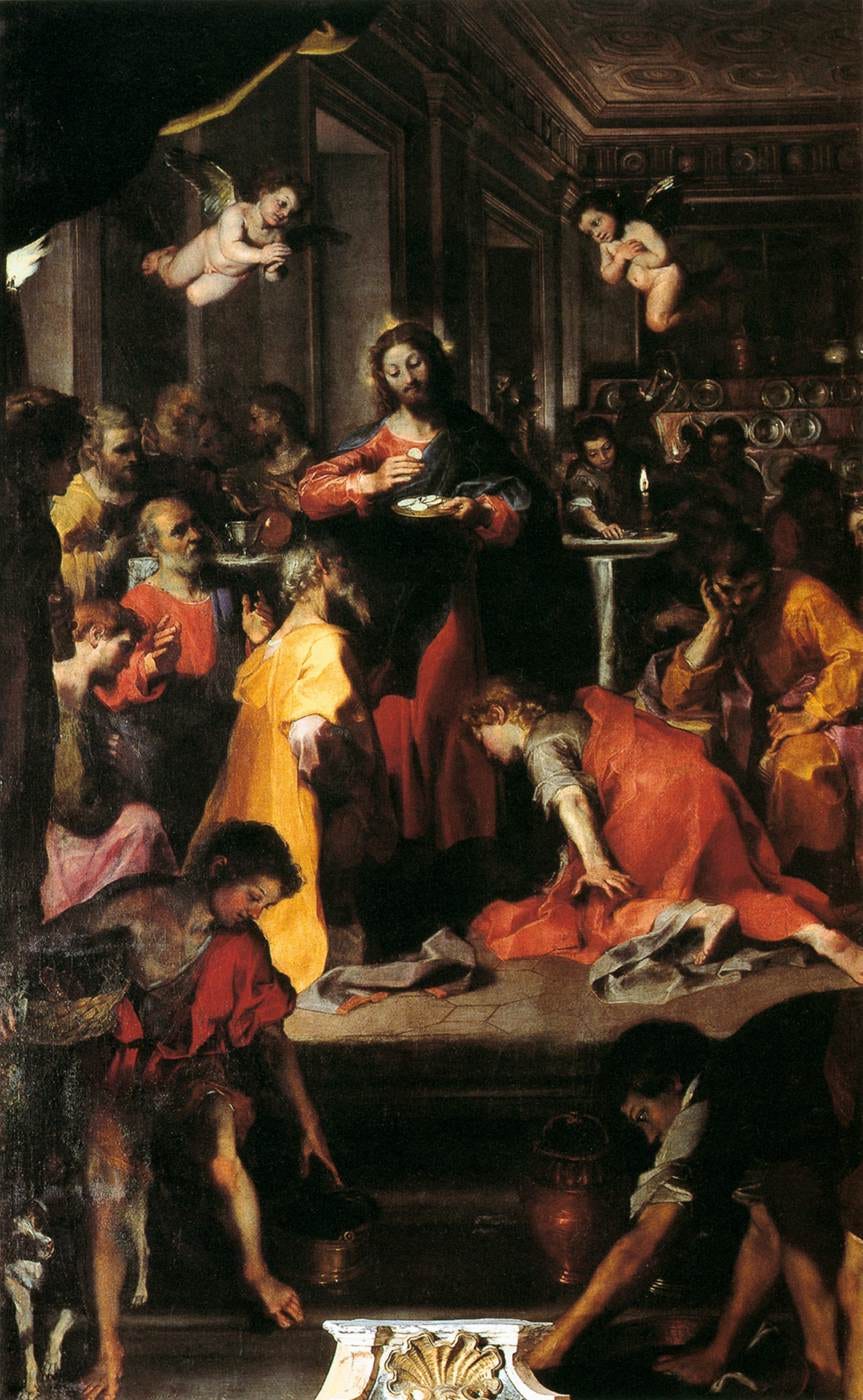
Notice what is not said here: recall. We instead proclaim. We proclaim Christ crucified, and we proclaim Christ resurrected. Here, the liturgy does more than describe a past event and remember it through actions. Here, the liturgy brings us back to this one singular event in the Paschal Mystery, where we may again sit at the table. It makes present the sacrifice of the Lord, entrusting it to His people who must learn to live from it.
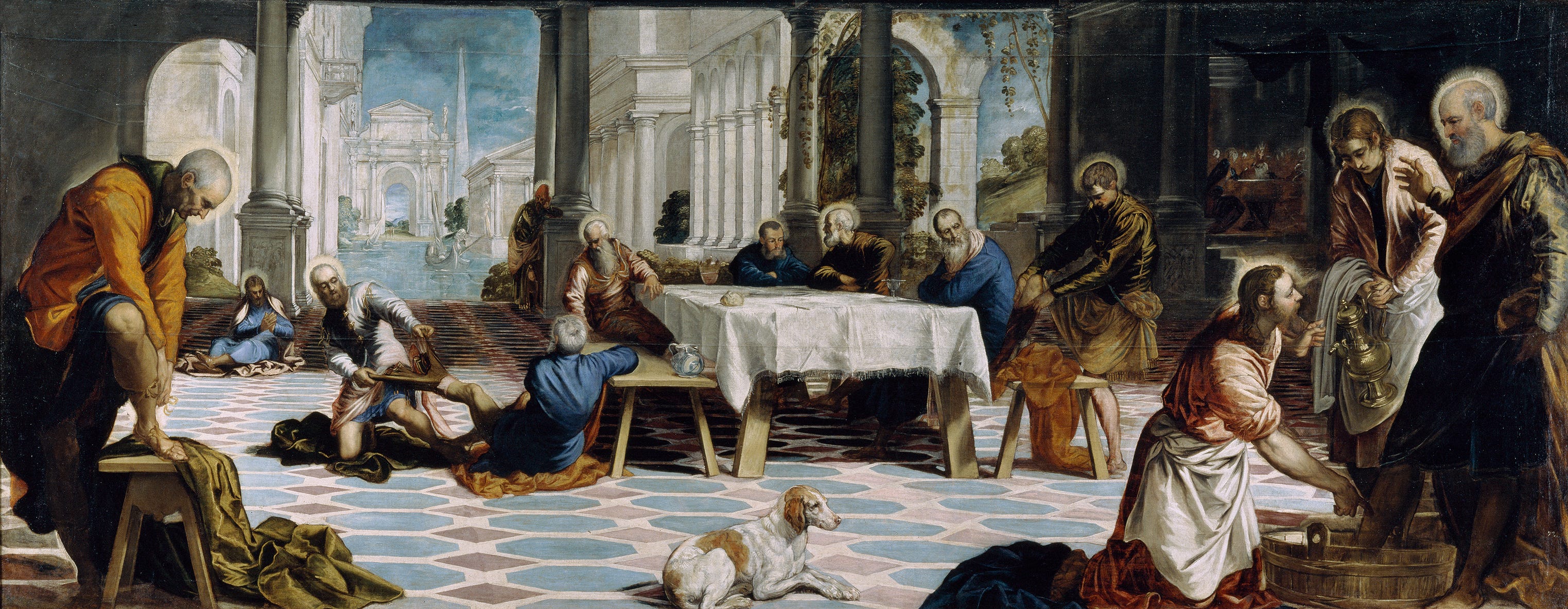
To look at Christ in the Gospel of today, we find a striking image. That of Our Lord kneeling. Quite different from what we see at the altar, where elevation and incense make for our sacrificial scene. We see the Lord kneel to reveal His servant heart. The one that we are meant to imitate in closeness and in joy. For if the Eucharist shows us what Christ is willing to give, the washing of His disciples’ feet shows how He gives. To give completely, without reservation, is the way that He shows us. Mandatum.
That is why with the washing of the feet becomes so crucial to our liturgy today. In it, we see that our leaders are willing to imitate the Christ that they serve and follow, totally and completely.
Here we can see the crux of where many of our well intentioned efforts fall short. We take the time to rehearse music or to improve execution. We aim for reverence in the liturgy, and yes, all of these things do matter. But without some type of sustained formation, we remain disconnected. Disconnected because no one drifts into Eucharistic living. There is no such thing as a choir accidentally becoming a community of sacrificial love. There is no such thing as a parish that just stumbles into a culture of love. Where what they sing from week to week is lived.
These things are spiritual gifts. And they are built. They are built from relying unfailingly on Christ. And it is over time, through repetition, through correction, that they come to their fruition.
Our source and summit is the Eucharist. We can either live to contain it, or we can live to let it transform us.
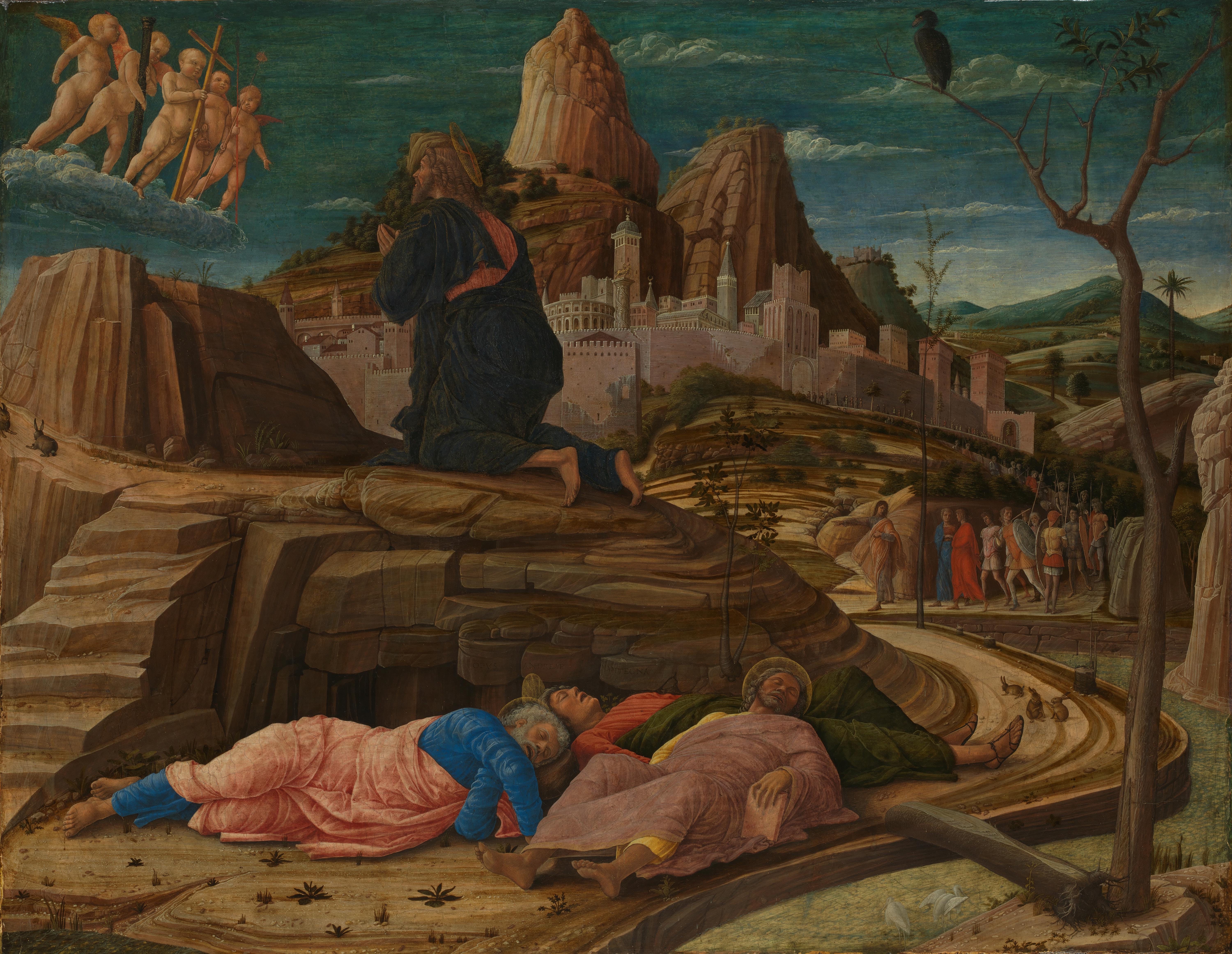
At the end of the liturgy, the altar will be stripped, and the Eucharist will be reposed. Something that the assembly is just not used to. That innate confusion is good in may ways. It shows that there is something we rely and depend on. That same source and summit. But the Church, instead, is left watching. Watching for what will come next. Because what Christ began at the table does not end there. It continues in silence, waiting for the Passion that will redeem our fallen nature.
Ars Musica Sacra is a reader-supported publication. To receive new posts and support our work, consider becoming a free or paid subscriber.
Feast Day Spotlight
Holy Thursday—Evening Mass of the Lord’s Supper
Holy Thursday stands at the threshold of the Paschal Mystery, where the Church receives the Eucharist not as a static devotion, but as a living participation in Christ’s sacrifice.
Historically, this night also marks the origin of the Church’s understanding of the priesthood as inseparable from the Eucharist. The act of, “doing this in remembrance” is more than ritual repetition, but sacramental continuity.
Sacrosanctum Concilium expresses this with precision:
“At the Last Supper… our Savior instituted the Eucharistic sacrifice of his Body and Blood… in order to perpetuate the sacrifice of the Cross throughout the ages.”
The liturgy does not recreate Calvary.
It makes it present—and forms a people capable of entering into it.
Share these Ars Musica Sacra insights with others for the celebration of this liturgy!
Ars Musica Sacra is supported by readers like you. Join our community and engage with other readers by sharing your thoughts and contributing to community discussions!

Have thoughts on what we shared here? Or maybe questions on some liturgy or theology points? Leave a comment and engage with other readers.