

When Nothing Seems to Change
Fifth Sunday of Lent—Resurrection is promised, but often delayed
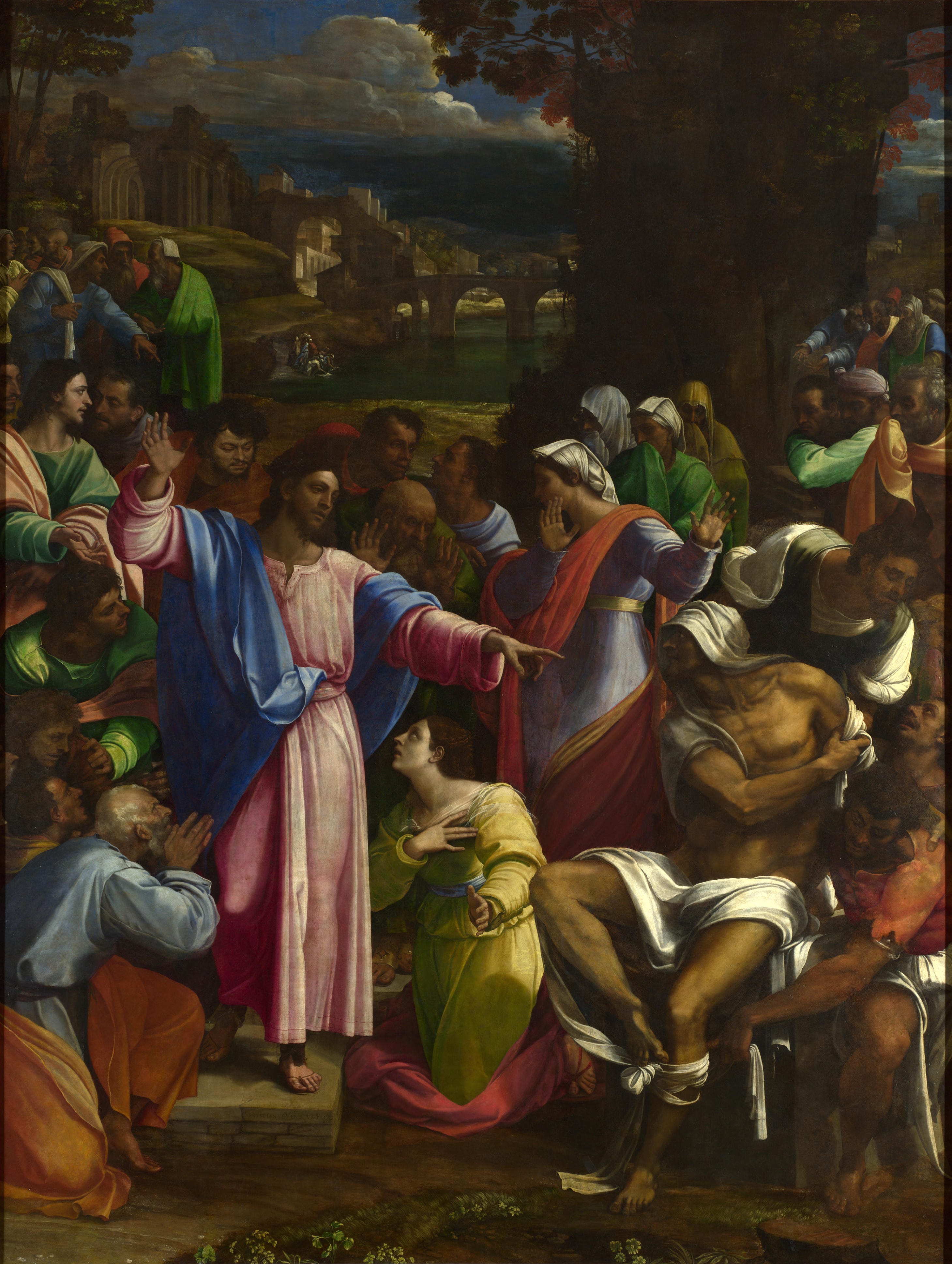
There is a particular kind of silence that settles over a parish when grief lingers longer than expected.
A funeral has passed. The music was reverent, even beautiful. The people wept. There were words of hope, the promise of resurrection spoken clearly.
And then… nothing seems to happen.
The family returns the next Sunday, but quieter. The choir sings as it always does. The liturgy continues. But something in the room feels unresolved—as if the promise proclaimed has not yet reached the places where death still lingers.
Most ministers recognize this moment. Not just in funerals, but in the slow, stubborn places of parish life where effort does not seem to yield renewal. Rehearsals plateau. Congregational singing stalls. Programs are introduced, then quietly fade. You begin to wonder—not out loud, but inwardly—whether anything is actually being raised.
This is the tension of the Fifth Sunday of Lent.
Because the Gospel does not rush past death. It lingers there.
Lazarus is not on the brink of death when Christ arrives. He is four days in the tomb. The language is deliberate. The body has begun to decay. The situation is no longer urgent—it is final.
And Christ waits.
The delay is not incidental. It is revelatory.
In Ezekiel, the Lord speaks not of healing the wounded, but of opening graves. Not of restoring what is damaged, but of calling forth what is already lost: “I will open your graves and have you rise from them.” This is not improvement. It is recreation.
Saint Paul sharpens the same point: the Spirit does not merely assist the living—it gives life to the dead. The Christian claim is not that God helps us manage decline. It is that He raises what cannot raise itself.
And so Christ stands before the tomb.
He does not explain. He does not justify the delay.
He weeps.
This is where many pastoral approaches become thin. We tend to move too quickly—either to solutions or to sentiment. But the liturgy holds both: the unflinching reality of death and the unhurried authority of resurrection.
Christ allows the weight of death to be fully seen. Only then does He speak.
“Lazarus, come out.”
The voice that called creation into being now calls a man out of decay. And what follows is just as important:
“Untie him and let him go.”
Resurrection is not the end of the work. It begins a process of being unbound.
This changes how we approach nearly everything in parish music.
First, it reframes our expectations. Much of what we encounter is not merely underdeveloped—it is, in some sense, lifeless. Habits have calcified. Repertoires have lost coherence. Musicians have never been formed, only recruited.
You cannot “energize” what has not been given life.
This is why the Church insists that sacred music is not decoration but participation in the liturgical action itself. As Sacrosanctum Concilium teaches, music is meant to be integral, not auxiliary. But integration requires more than intention—it requires formation over time.
Second, it changes how we measure progress.
If Christ is willing to wait four days, we should be cautious about demanding visible results in four weeks. The work of forming a choir, a congregation, even a priest’s liturgical instinct, is not linear. It involves periods that feel like silence, or even regression.
But silence is not absence. It is often preparation.
Third, it clarifies the role of the minister.
You are not the one who calls Lazarus out of the tomb.
But you are among those commanded to untie him.
This is where discipline, continuity, and structure matter. Rehearsal is not just practice—it is unbinding. Teaching is not information—it is participation in the slow restoration of perception. Repertoire is not preference—it is memory being rebuilt.
Most parishes do not fail because they lack desire.
They fail because no one remains long enough, or works patiently enough, to see resurrection through to unbinding.
The Church does not rush to Easter.
She walks through the tomb.
And she stays there long enough to learn the difference between what can be improved and what must be raised.
If you are serious about sacred music, you will face both.
And you will need more than inspiration to endure it.
You will need formation that is steady enough to wait, and structured enough to recognize when life has begun again—even before anyone else sees it.
Ars Musica Sacra is a reader-supported publication. To receive new posts and support our work, consider becoming a free or paid subscriber.

Feast Day Spotlight—Fifth Sunday of Lent—The Final Threshold Before Holy Week
This Sunday stands at the edge of the Paschal Mystery. The raising of Lazarus is not merely a miracle; it is a sign that anticipates Christ’s own Resurrection. In the early Church, this Gospel was closely associated with the final preparation of catechumens before baptism at Easter.
Historically, this moment was understood as a direct confrontation with death itself—not metaphorically, but ontologically. The One who will soon enter the tomb demonstrates that He has authority over it.
A striking reflection comes from St. Irenaeus of Lyons, who saw in Lazarus a sign of the entire human condition:
“For as he who was dead rose at the command of the Lord, so also we, being dead through sin, are made alive by Him.”
More than mere symbolic language, this becomes the language of our salvation.
Share these Ars Musica Sacra insights with others for the celebration of this liturgy!
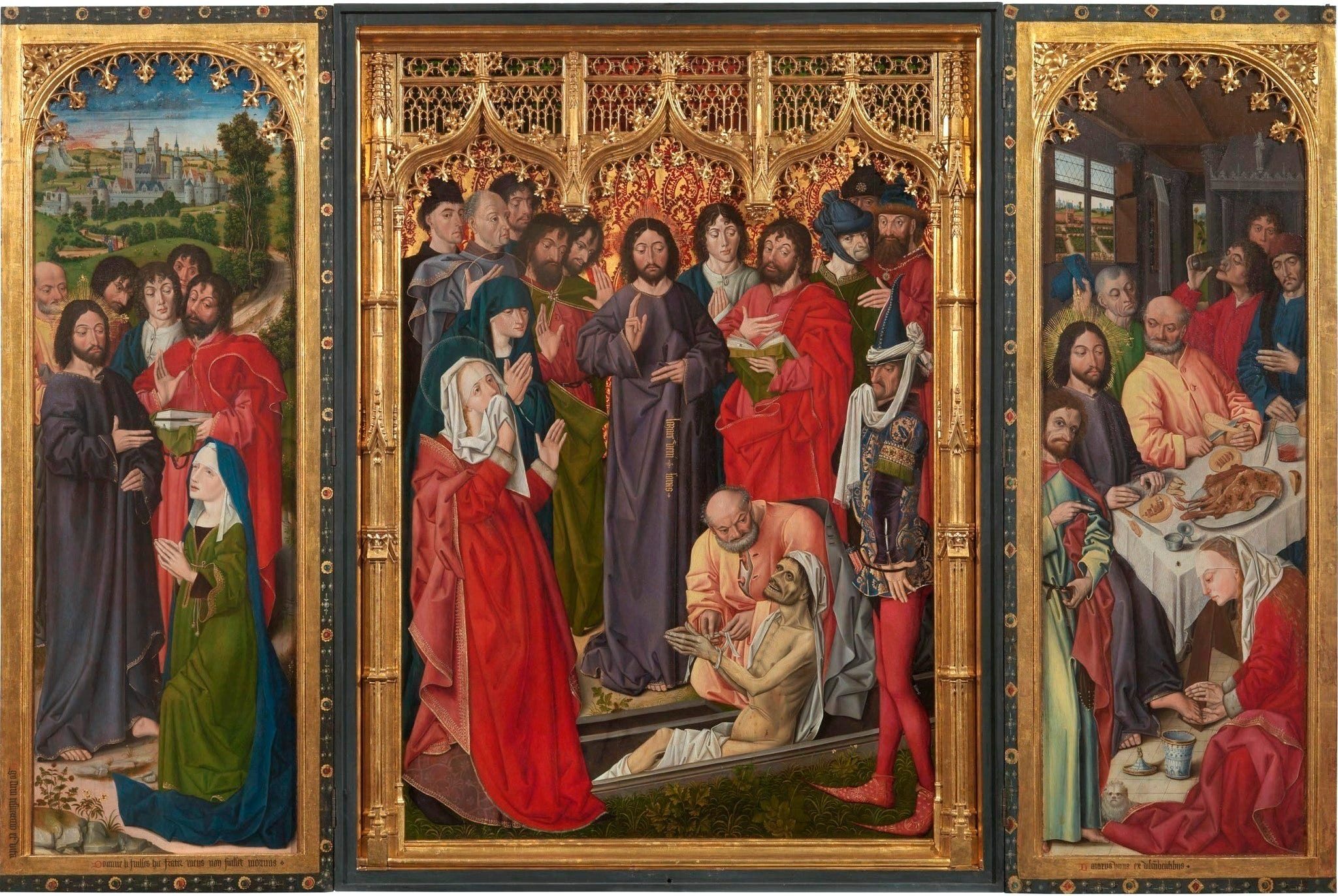
Inspiration from across the internet.
→ Check in for more later!
My music of the week.
No music for this week!
Ars Musica Sacra is supported by readers like you. Join our community and engage with other readers by sharing your thoughts and contributing to community discussions!

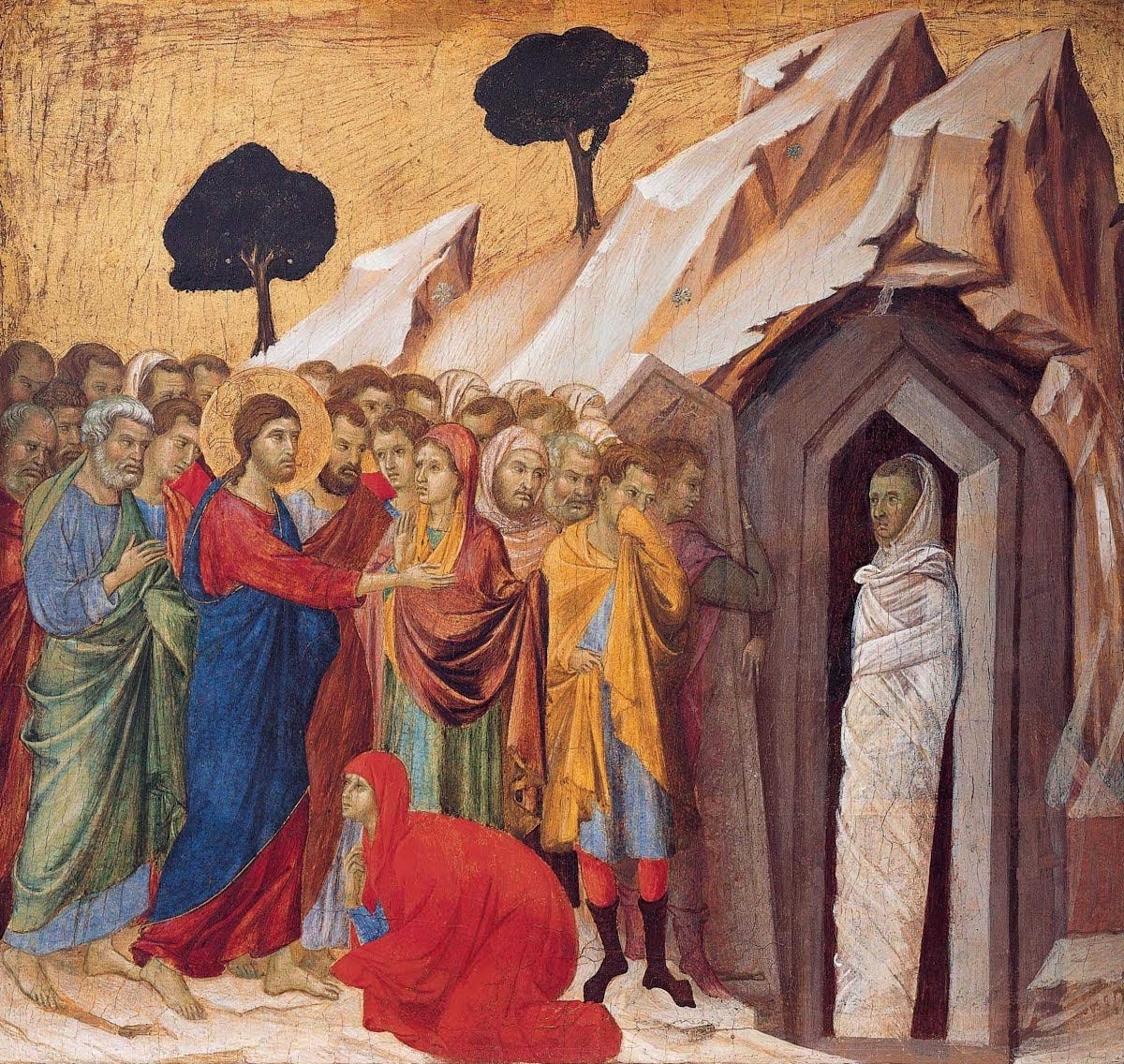
Have thoughts on what we shared here? Or maybe questions on some liturgy or theology points? Leave a comment and engage with other readers.