

Twenty-third Sunday in Ordinary Time
The Cost of Song, the Cost of Discipleship
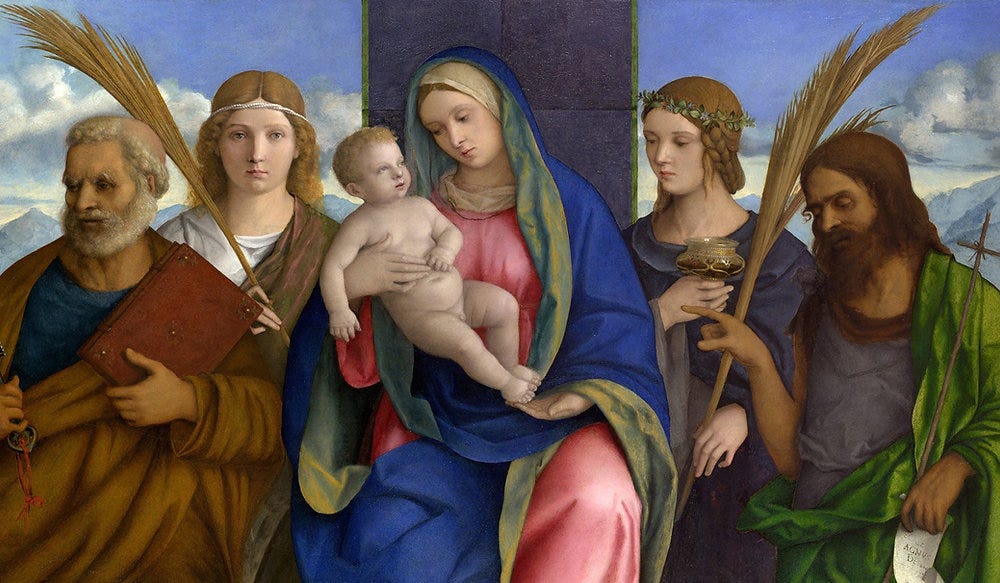
Sacred music, like discipleship, costs everything—but what it yields is nothing less than Christ Himself.
There is a sobering clarity in today’s readings: human wisdom falters, our plans are uncertain, and our lives pass like grass that springs up in the morning only to fade by evening. The Book of Wisdom admits what every honest heart knows—that we scarcely grasp even earthly realities, and unless God Himself pours out wisdom and sends His Spirit, our paths remain crooked and our vision clouded. The psalmist joins this lament, begging the Lord to teach us to number our days aright, not as a morbid calculation of time’s brevity, but as the seedbed of true wisdom: to remember that every morning is a gift, every task a chance for grace, every breath borrowed from the One who alone endures.
Against this backdrop, Paul’s brief letter to Philemon strikes a note of startling intimacy. He appeals not with authority but with affection, interceding on behalf of Onesimus—a runaway slave who has become, through the Gospel, his “own heart.” What matters most is not legal obligation but transformation: not master and servant but brother and brother, not coerced good but love freely chosen. In this short exchange we glimpse the Gospel’s costly demand: to surrender the world’s categories of power and control, and to let grace remake our relationships in Christ.
And then comes Jesus’ own hard word. To follow Him is not to add a religious layer to life’s comforts but to relinquish even the closest ties if they prevent us from carrying the cross. Discipleship is not a hobby; it is a tower that must be built with forethought, a battle that must be entered with total resolve. He does not soften the demand: unless we renounce possessions, family, even our very selves, we cannot be His disciples. It is not cruelty, but honesty—for the Kingdom is not half-built towers or compromised allegiances, but the costly beauty of the Cross.
Sacred music is not exempt from this reckoning. To sing the Lord’s song in the Liturgy is itself a form of discipleship, one that requires both renunciation and resolve. St. Gregory of Nazianzus once said, “Let us not esteem worldly possessions, but heavenly; not glory on earth, but in heaven.” His insight is crucial for ministers of music: the temptation to treat music as performance, as possession, as something to be “ours,” must give way to the humility of service, where the song belongs not to us but to Christ and His Church.
The Church reminds us of this in Tra le Sollecitudini (1903), where St. Pius X insisted that the purpose of sacred music is “the glory of God and the sanctification and edification of the faithful.” This is not an aesthetic afterthought but a renunciation: to let go of vanity, of applause, of personal acclaim, so that every chord and phrase might instead be offered as a sacrifice of praise. In this sense, to prepare the psalm, to lead the choir, to accompany the assembly is itself a way of carrying the cross—not always dramatic, often hidden, sometimes misunderstood, yet always a participation in the costly beauty of worship.
Perhaps the hidden grace in this Sunday’s readings is that song and discipleship share the same shape: both demand surrender before they yield joy, both require counting the cost before discovering the gift, both turn possession into offering, and both are only truly fulfilled when they pass through the Cross into resurrection. To stand in the sanctuary and lift your voice is not simply to “make music”—it is to stand with Paul who gave up freedom for the sake of the Gospel, with Onesimus who learned a new identity in Christ, with Wisdom’s seekers who confessed their limits, with Christ Himself who renounced all so that all might be saved.
So when the melody seems costly, when rehearsal feels like burden, when the notes you sing or play are unnoticed or unreturned—remember that this is the music of discipleship, where the price of renunciation becomes the very sound of redemption, and where every hidden sacrifice is gathered into the eternal hymn of heaven.
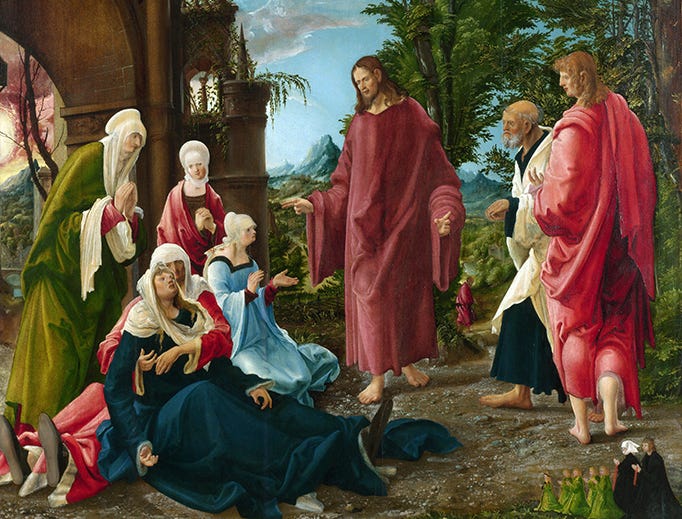
Inspiration from across the internet.
→ an interesting usage of clay in India
→ being big into gardening means that there are things you learn all the time! here is one that comes from ancient civilizations all around the world
My music of the week.
1) some fun music to leave on while doing house work
2) to me, this work is deceptively simple
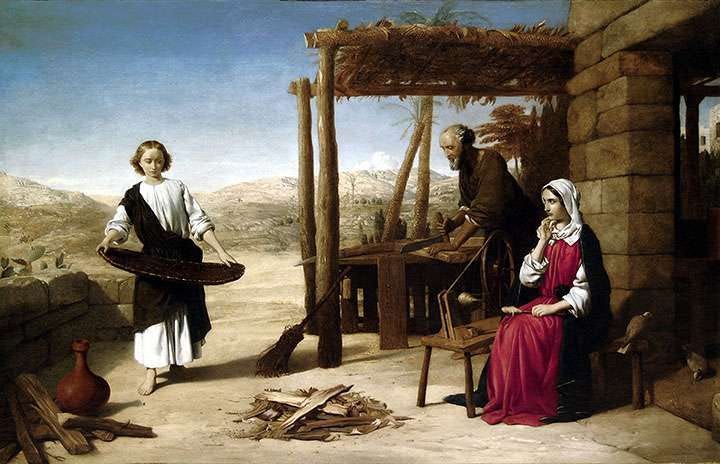
General Information
Color of Vestments - Green
Song Recommendations
Entrance - Holy Wisdom, Lamp of Learning (BEACH SPRING) [sheet music] [audio]
Kyrie - Missa Spei
Gloria - Missa Spei
Responsorial Psalm - Psalm 90:3-4, 5-6, 12-13, 14 and 17
Gospel Acclamation - Psalm 119:135
Offertory - Be Still, My Soul (FINLANDIA) [sheet music] [audio]
Sanctus - Missa Spei
Mysterium Fidei - Missa Spei
Amen - Missa Spei
Agnus Dei - Missa Spei
Communion - Psalm 42 (As the Deer Longs) (O WALY WALY, alt.) [sheet music] [audio]
Meditation - Renunciation (Madrigal)
Recessional - A Mighty Fortress (EIN’ FESTE BURG) [sheet music] [audio]
