

To the Cross, To Stay
Good Friday—The mystery of a suffering God
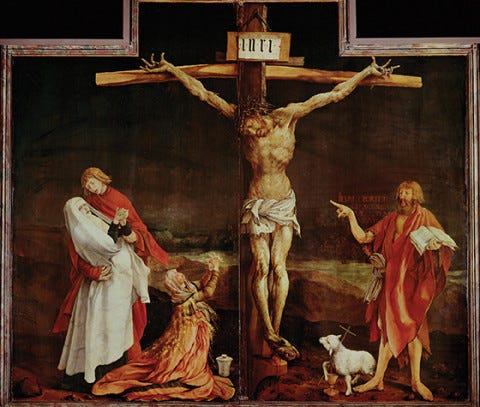
We arrive at the point where the Church feels still.
Really, this is the only point in the liturgical year where this feeling permeates the entirety of the liturgy. There is no music at the entrance, no chance to gain “momentum.” Only the haunting image of the cross carried. In this background we see a bare altar, a stripped sanctuary, covered saints, and an empty tabernacle. The people enter quietly, and sometimes, they seem unsure even where to look.
Once we arrive at the gospel reading, the liturgy feels different. The Passion of the Lord is proclaimed in full, and we encounter our Lord in a rare way. In this reading, there is nothing summarized, there is nothing shortened, and there is especially nothing softened. We encounter the Christ on the Via Dolorosa. We too endure with Him. There is a palpable feeling in the room. Like the reading, just won’t end. But that is the point. The weight of it presses on us and we are drawn back in. Once we feel this weight, we want the redemption. Often, we want that redemption before we have really suffered with Christ.
When we look at the other readings for today we see that this moment had already been coming. The salvation history that God had set out since the early days of His people, to redeem them and all mankind from their sins. In Isaiah, we learn of a servant that is spurned and avoided. We hear that God’s plan is suffering.
He was spurned and avoided by people,
a man of suffering, accustomed to infirmity,
one of those from whom people hide their faces,
spurned, and we held him in no esteem.
Yet it was our infirmities that he bore,
our sufferings that he endured,
while we thought of him as stricken,
as one smitten by God and afflicted.
But he was pierced for our offenses,
crushed for our sins;
upon him was the chastisement that makes us whole,
by his stripes we were healed.
Even in the words of Isaiah, we may find the temptation to explain such a course away. Or to make excuses for what could be meant instead. Yet here, Isaiah saw what was to come. And the liturgy itself makes us see what Isaiah’s eyes never beheld.
Through it all, the betrayal, arrest, denial, silence, mockery, and abandonment; the hardest part for many is the reaction. Christ does not resist. A stumbling block for the proud, mighty, and powerful. How does God allow this? Why does God allow this? Yet, it is in the obedience of Christ that we learn our fullest and deepest lessons, that the way of God is obedience unto death. Moreover, Christ’s obedience is perfected in His suffering. A continuity brought about by the martyrs of the Church, even to the modern age.
But what does today teach us about the liturgy? Well, at minimum, we should leave with a better senes of how to approach it. Good Friday is more than just doing the rubrics correctly or being able to say, “we got all the music timed right.” Instead, we should be entering into the mystery of Good Friday through the liturgy. In this way, we can ask questions like: Did we allow time for silence? Did our music enter into lament as prayer rather than mere affect? Did our music speak to the mystery in a pastoral way? Are we filling space because we are afraid of what would happen if we do not?
Holy Mother Church teaches us something that should be deeply innate through the Good Friday liturgy. In restraint, there is beauty. Music does not decorate the Passion or the veneration of the cross. Instead, music presents itself in these moments for solemnity.
And the Good Friday liturgy does not resolve. There is “nothing” at the end. We leave again in silence in a way where people say, “thats it?” And rightly so. We are left at the tomb. For to meet Christ at the resurrection, we must also meet Him at the cross.
Ars Musica Sacra is a reader-supported publication. To receive new posts and support our work, consider becoming a free or paid subscriber.
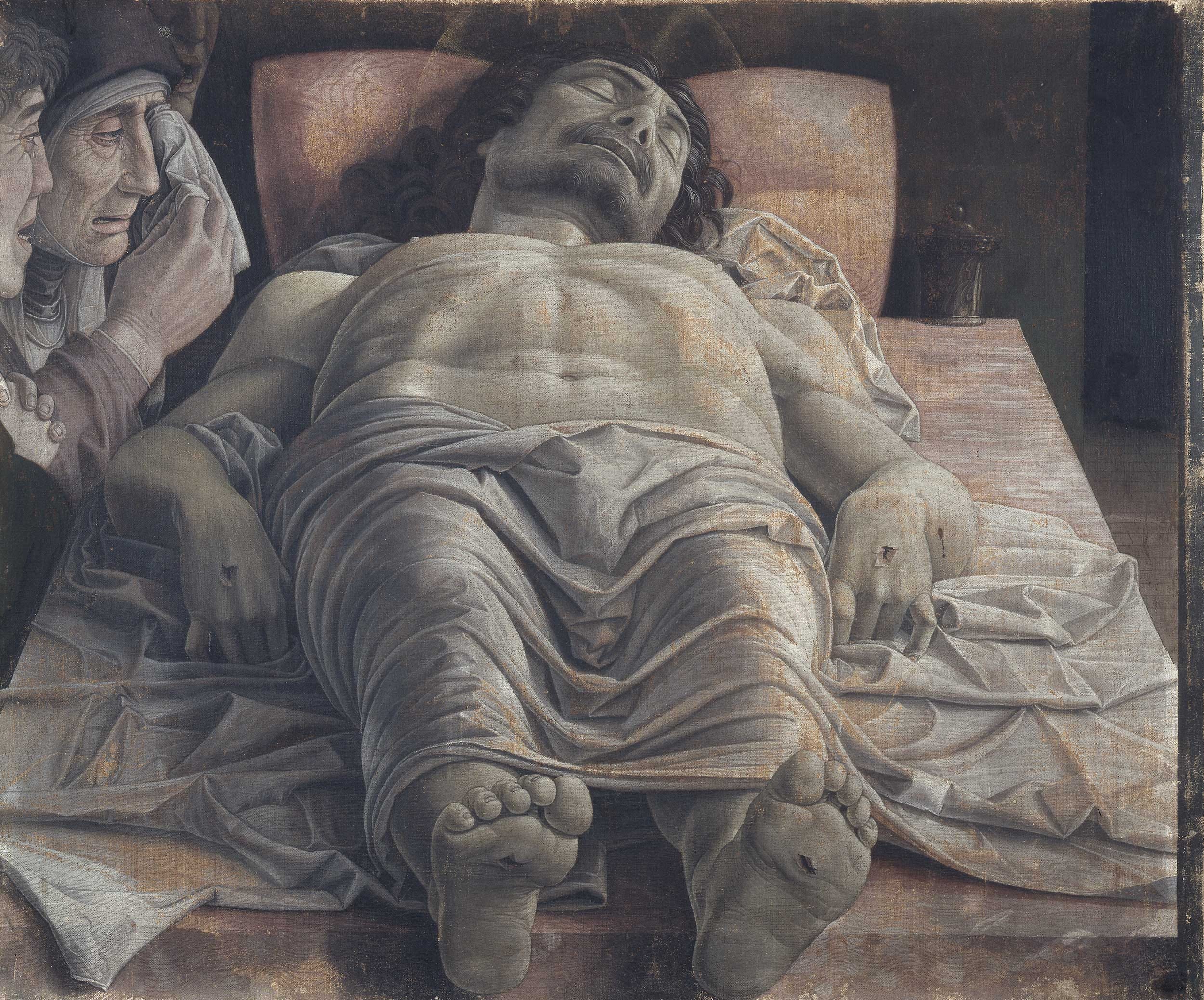
Feast Day Spotlight
Good Friday—The Passion of the Lord
Good Friday stands at the center of the Church’s year not as an isolated event, but as the fulfillment of the Passover, and the revelation of Christ as both eternal high priest and victim.
The early Church Fathers saw in the pierced side of Christ the birth of the Church itself—blood and water flowing as sacramental life. This is how we come to the Vidi Aquam, “I saw water flowing from the side of the temple.” And come Eastertide, we may proclaim it in celebration of the seminal event of the Church’s liturgical calendar.
The liturgy’s austerity is deliberate. There is no Eucharistic consecration on this day. The Church fasts not only from food, but from fullness—so that desire itself may be purified.
A line from the Roman Missal captures this posture with clarity:
“Behold the wood of the Cross, on which hung the salvation of the world.”
Share these Ars Musica Sacra insights with others for the celebration of this liturgy!
Ars Musica Sacra is supported by readers like you. Join our community and engage with other readers by sharing your thoughts and contributing to community discussions!

Have thoughts on what we shared here? Or maybe questions on some liturgy or theology points? Leave a comment and engage with other readers.