

To See Clearly—And to Recognize God
Fourth Sunday of Lent (Laetare)—Learning to see with the heart rather than the surface
There is a particular kind of frustration that emerges slowly in parish life.
A new initiative begins with hope. A choir learns something more demanding than usual. A priest preaches more deeply into the Scriptures. Silence begins to appear in places where there was once only noise. And after a few weeks someone says, sometimes politely and sometimes with irritation, “Why are we changing things that already worked?”
The tension is not always about resistance. Often it is about sight.
People believe they are already seeing clearly. And when that conviction settles in, anything unfamiliar begins to look suspicious.
The Fourth Sunday of Lent places that tension directly before us.
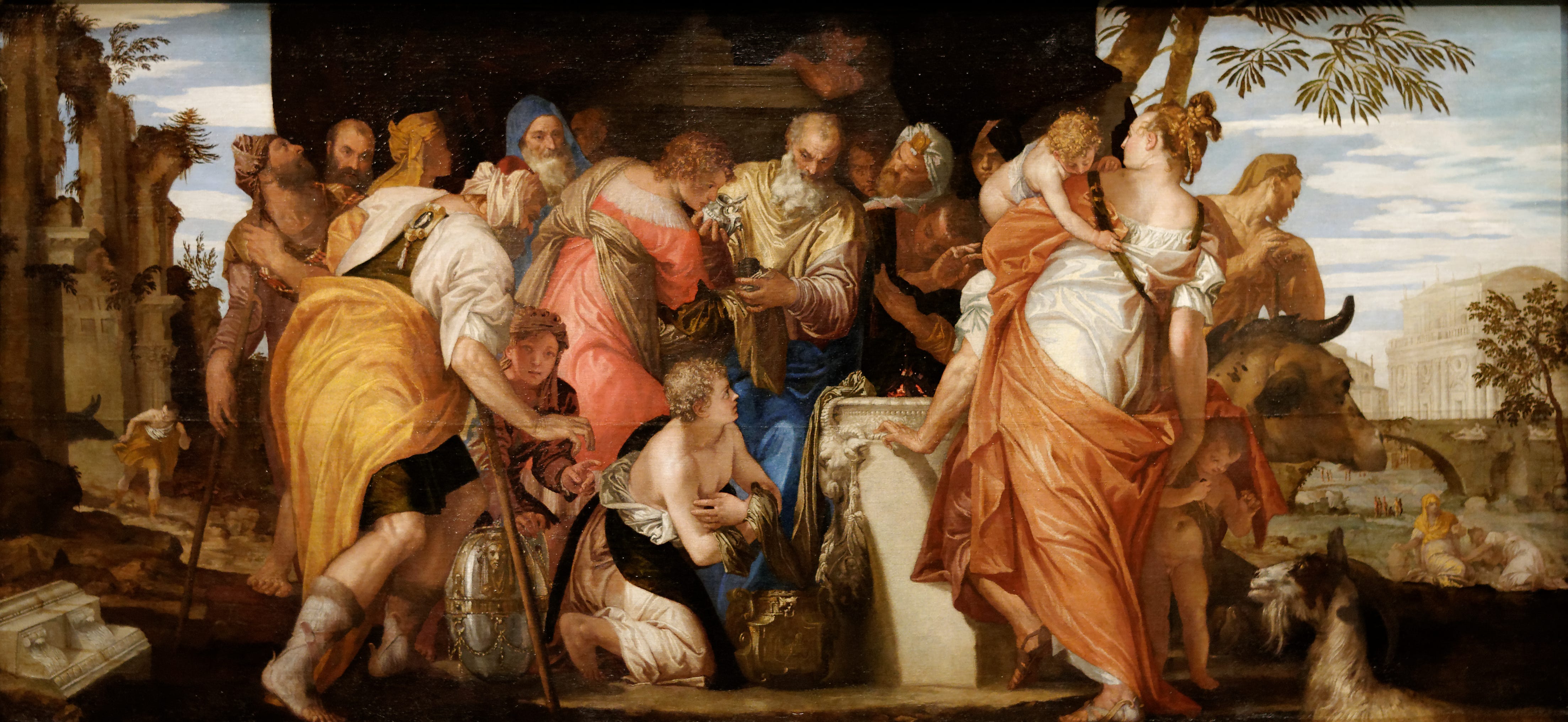
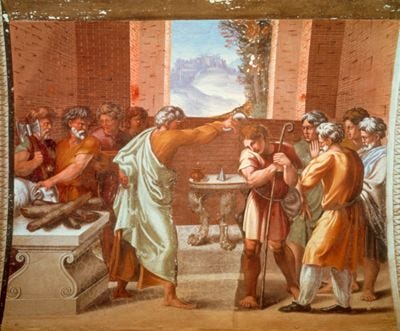
Samuel arrives at Jesse’s house looking for the Lord’s anointed, and like anyone with normal human instincts he assumes the choice will be obvious. Eliab is tall, impressive, outwardly kingly. Surely this must be the one. Yet the Lord interrupts the prophet’s intuition with a sentence that echoes through the whole biblical tradition: “Not as man sees does God see, because man sees the appearance but the LORD looks into the heart.”
The future king is not in the room. He is outside with the sheep.
David is summoned, anointed, and from that moment “the spirit of the LORD rushed upon him.” But notice how quietly it happens. No public coronation. No recognition from the brothers. The decisive act occurs almost unnoticed.
The Gospel of John takes that same principle and dramatizes it with uncomfortable clarity.
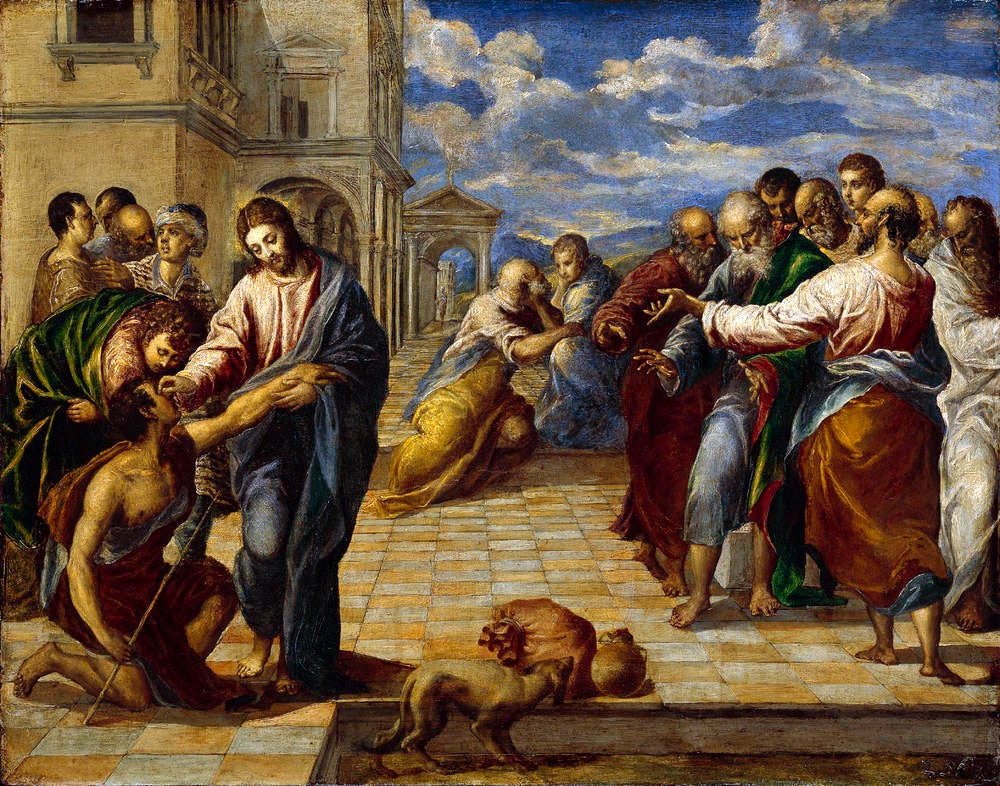
A man born blind receives sight. The miracle itself is simple: clay, water, obedience. But the real drama unfolds afterward. The neighbors debate his identity. The Pharisees conduct an investigation. The parents distance themselves. The man himself slowly grows in clarity, moving from “the man called Jesus” to “a prophet,” and finally to worship: “I do believe, Lord.”
The irony of the story is sharp. The only person who truly sees is the one who was blind.
St. Augustine, reflecting on this passage, observed that the clay Christ places on the man’s eyes recalls the earth from which humanity was first formed. The Creator remakes the creature, and sight becomes a sign of new creation. Yet the miracle exposes something deeper than physical blindness. The Pharisees are trapped by a more dangerous darkness—the conviction that they already understand.
Paul’s words to the Ephesians illuminate this interior shift: “You were once darkness, but now you are light in the Lord.” Notice that he does not say we were in darkness. He says we were darkness. Conversion is not cosmetic. It is ontological. The light of Christ does not merely inform our perception; it recreates it.
This has uncomfortable implications for anyone responsible for forming the Church’s worship.
It is possible to manage liturgy for years while remaining largely blind to what it is meant to reveal. We can become highly skilled at maintaining familiar patterns—music that is predictable, pacing that avoids tension, rituals that move efficiently—while the deeper purpose of the liturgy quietly fades from view.
The result is not chaos. In fact, it often feels stable. But stability can mask blindness.
The healed man in John’s Gospel does something strikingly simple: he tells the truth about what happened. “One thing I do know is that I was blind and now I see.” His testimony is unsophisticated, but it is honest. And that honesty becomes threatening to those who prefer the security of their own explanations.
Every parish eventually faces that moment.
Someone begins to see the liturgy more deeply—perhaps through study, perhaps through encounter with the tradition—and the natural instinct is to share what has been discovered. The challenge is that communities rarely change through sudden enlightenment. Sight develops slowly, through repeated exposure to the light.
This is why the Church forms her ministers not primarily through occasional inspiration but through habit. The repetition of the Psalms. The stability of the liturgical year. The patient cultivation of texts and melodies that carry theological weight. Over time, these elements begin to reshape perception.
People start to notice what they had previously overlooked.
A Psalm that once sounded like filler begins to reveal its structure. A moment of silence becomes charged rather than awkward. The Eucharistic prayer becomes audible again rather than background noise.
Sight, in other words, is formed.
Psalm 23 quietly reinforces this dynamic. The shepherd does not merely feed the sheep; he leads them—to pastures, to water, even through the “dark valley.” Formation is movement. It assumes that the flock cannot guide itself toward nourishment without being taught to trust the path.
The temptation in modern pastoral life is to assume that clarity must appear instantly if it is going to appear at all. But the Gospel suggests something slower and more demanding. The blind man sees in stages. The crowd debates. The authorities resist. And only at the end does the full revelation occur: “You have seen him, the one speaking with you is he.”
Then the simplest and most important act happens.
“He worshiped him.”
This is the destination of sight.
Not analysis. Not aesthetic preference. Worship.
When liturgy is ordered toward that encounter—toward helping people truly see Christ present and acting—the arguments about style begin to lose their urgency. The real question becomes whether our practices illuminate the presence of the Lord or obscure it.
Most parishes do not struggle because their leaders lack devotion. They struggle because the structures that cultivate long-term sight—musical memory, theological literacy, ritual consistency—have been weakened or forgotten. Without those structures, each Sunday begins again from zero.
And people remain partially blind.
The good news is that Christ still passes by.
He still anoints eyes with clay.
He still sends people to wash.
And he still finds those who have been cast out.
When that happens, the only adequate response is the one the healed man eventually gives.
“I do believe, Lord.”
And then—finally—he worships.
Ars Musica Sacra is a reader-supported publication. To receive new posts and support our work, consider becoming a free or paid subscriber.
Feast Day Spotlight—Fourth Sunday of Lent (Laetare Sunday)
The Fourth Sunday of Lent is traditionally known as Laetare Sunday, from the Latin opening of the Entrance Antiphon: Laetare Jerusalem — “Rejoice, Jerusalem.” In the midst of the Lenten desert, the Church briefly lifts the tone of penance to remind the faithful that Easter’s light is already approaching.
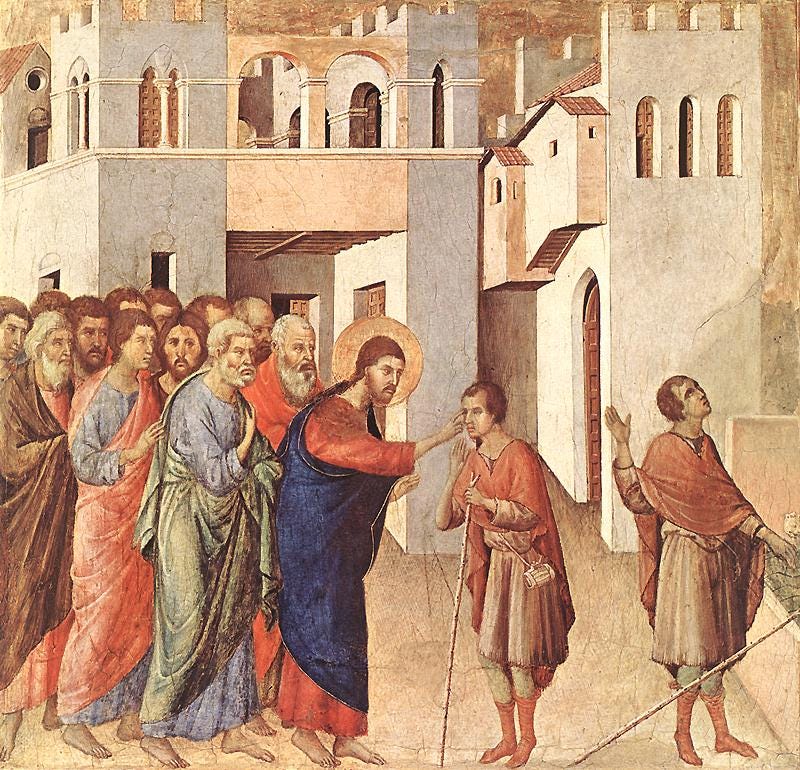
Historically, the Gospel of the man born blind played a central role in the final preparation of catechumens before Baptism. The Church read the miracle not merely as a healing story, but as an image of illumination—the moment when the baptized pass from darkness into the light of Christ.
St. Augustine summarized the mystery succinctly:
“The blind man is the human race.”
The clay placed on the eyes symbolizes humanity being remade by the Word who first formed Adam from the earth. The washing in Siloam anticipates the waters of Baptism, through which sight is restored and true worship becomes possible.
Share these Ars Musica Sacra insights with others for the celebration of this liturgy!
Inspiration from across the internet.
→ I love our universe. It’s infinite majesty always enraptures me.
My music of the week.
Ars Musica Sacra is supported by readers like you. Join our community and engage with other readers by sharing your thoughts and contributing to community discussions!

Have thoughts on what we shared here? Or maybe questions on some liturgy or theology points? Leave a comment and engage with other readers.