Third Sunday of Advent
Joy Before Resolution: Singing Hope While the Gates Are Still Closed
There is something almost paradoxical about joy arriving in the middle of waiting,
announced not when the prison doors open or the desert finally turns green, but while John the Baptist is still confined, the people are still weary, and the world remains unfinished—because Advent never promises us resolution before it offers us hope, and the Third Sunday dares to call the Church to rejoice not because everything is clear, but because God has already begun to act in ways that cannot be undone. Isaiah’s vision does not deny the barrenness of the desert or the fragility of weakened hands and trembling knees; instead, it speaks directly into them, proclaiming that even the places most marked by scarcity will one day resound with song, that joy itself will be audible before it is fully visible, and that the tongue of the mute will sing precisely because salvation is something that breaks open what has long been held closed.
What makes this promise unsettling—and therefore credible—is that it unfolds without sentimentality. The prophet does not invite the people to manufacture optimism, but to strengthen one another in patience, to speak courage into frightened hearts, and to trust that the God who comes to save does so not according to human timelines but according to divine fidelity. This same tension shapes James’s exhortation to the early Church, where waiting is compared not to idle delay but to agricultural endurance, the slow cooperation with forces beyond one’s control, where growth happens invisibly long before it becomes harvest. Advent patience, then, is not passive resignation but disciplined hope, the refusal to grumble against one another while the Judge already stands at the gates.
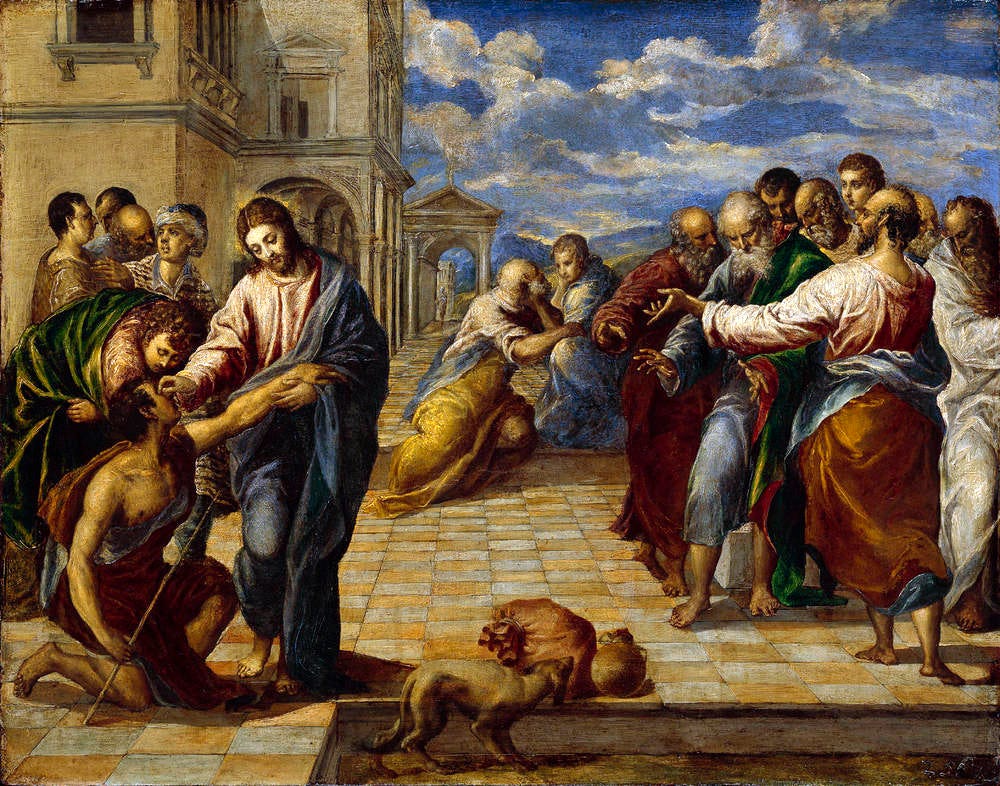
And it is precisely within this unresolved space that John the Baptist sends his question from prison, a question that sounds almost dangerous in its honesty: Are you the one who is to come, or should we look for another? There is no attempt to soften the edges of doubt here, no spiritual posturing to preserve John’s reputation. Even the greatest born of women must wrestle with the gap between expectation and experience, between what was proclaimed in the wilderness and what now unfolds behind stone walls. Jesus’ response does not offer explanation or reassurance in abstract terms; instead, He points to concrete signs—the blind seeing, the lame walking, the poor receiving good news—and leaves John to interpret these works through the lens of faith rather than control.
For those entrusted with the Church’s music, this exchange cuts close to the bone, because so much of liturgical ministry is lived in precisely this in-between state, where the promised joy of the Gospel must be sung before it feels complete, where the psalm must rise even when voices are thin, and where faithfulness matters more than visible success. Gaudete Sunday does not suspend Advent’s sobriety; it intensifies it, reminding us that Christian joy is not the absence of suffering but the presence of meaning, the deep assurance that God is already at work healing what cannot yet be fixed.
The Church has long understood that music plays a singular role in sustaining this kind of hope. St. Hildegard of Bingen, writing from within her own experience of illness and limitation, spoke of sacred song as humanity’s participation in the harmony that existed before the Fall, insisting that when the Church sings, creation itself remembers what it was made for. This is not escapism, but resistance—the refusal to let silence be claimed by despair rather than expectation. In a similar spirit, the General Instruction of the Roman Missal reminds us that the Responsorial Psalm is not an interlude but a response, the people’s sung answer to the Word they have heard, shaped by the conviction that God’s promises are trustworthy even when fulfillment feels distant.
John the Baptist stands as a patron for this kind of ministry, not because he is unwavering, but because he is truthful, willing to decrease even when clarity costs him comfort. His greatness lies not in certainty but in fidelity, in preparing the way even when the way leads through confinement rather than acclaim. And Christ’s startling affirmation—that the least in the Kingdom is greater than he—does not diminish John, but reveals the radical intimacy of the new covenant, where joy is no longer announced only from the margins but entrusted to the whole Body of Christ, gathered, waiting, and singing together.
Perhaps this is why the Church interrupts Advent’s restraint with rose-colored joy, not to distract us from longing, but to train us in hope, to teach us how to sing before the desert blooms, how to proclaim salvation while the gates still seem closed, and how to trust that the music offered in faith will one day be gathered into the everlasting joy Isaiah foresaw. Because when the Lord comes—and He is already nearer than we think—the sound of that joy should not be unfamiliar.
It should feel like something we have been rehearsing all along.

Feast Day Spotlight
Color of Vestments — Rose
Third Sunday of Advent — Gaudete Sunday
The Third Sunday of Advent takes its name from the opening word of the traditional Introit, Gaudete in Domino semper—“Rejoice in the Lord always”—a command that arrives not at the end of waiting, but squarely in its middle. Liturgically, the Church softens the season’s austerity with rose vestments and a more audible tone of gladness, signaling that Christian joy is not postponed until Christmas but already accessible through trust in God’s nearness.
Historically, this Sunday reflects the Church’s deep pastoral realism: joy is given as sustenance, not reward. St. Gregory the Great taught that true joy is born of hope rather than possession, insisting that the Church must learn to rejoice in promise so as not to collapse under delay. This insight resonates with Advent’s musical character, where restrained instrumentation and expectant texts give way—not to triumph—but to encouragement.
The Directory on Popular Piety and the Liturgy echoes this wisdom by noting that Advent joy is “marked by sobriety,” shaped by longing rather than excess, and oriented toward conversion of heart. For music ministers and priests, Gaudete Sunday offers a precise liturgical lesson: sacred music here should not overwhelm the season’s tension, but illuminate it, allowing joy to emerge as trust rather than spectacle, as confidence rather than completion.
In this way, the Church teaches her ministers to sing not because the desert has already bloomed, but because it will—and because God has promised that even the waiting itself will not be wasted.
Inspiration from across the internet.
My music of the week.