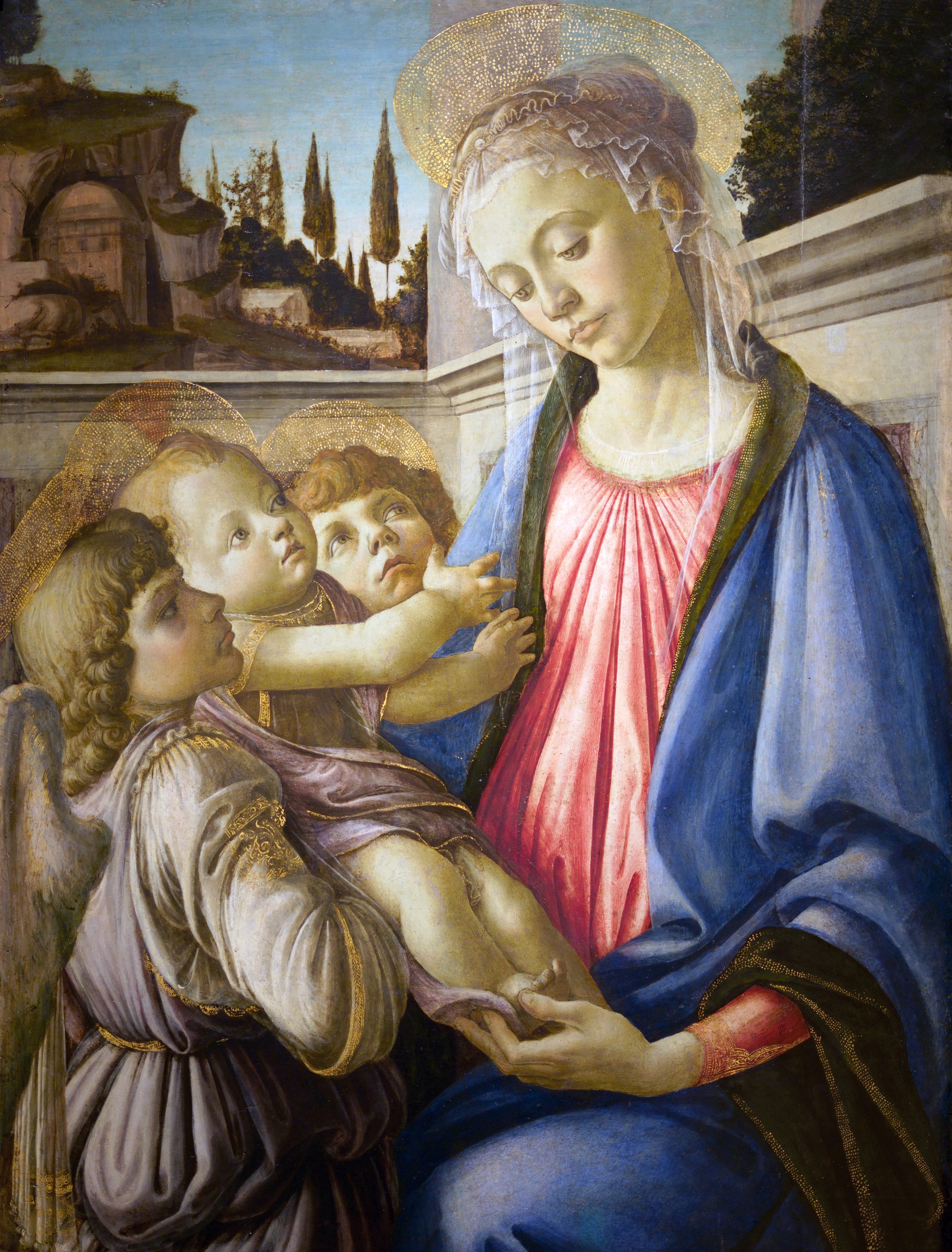
Solemnity of the Immaculate Conception of the Blessed Virgin Mary
Grace Prepares the Ground Before the Song Is Ever Sung
There is something almost unbearable in the tenderness of the question God asks in the garden—Where are you?—
because it reveals not a deity hunting for a culprit, but a Father searching for communion that has already begun to fracture, a voice that still walks among the trees even after fear has taught humanity how to hide. Adam’s response is not a confession but an evasion, not trust but self-consciousness, and yet God does not withdraw His promise; instead, He speaks directly into the wound, naming enmity between the serpent and the woman, between deception and a future fidelity that will not be overcome, even if it must pass through suffering to arrive at victory.
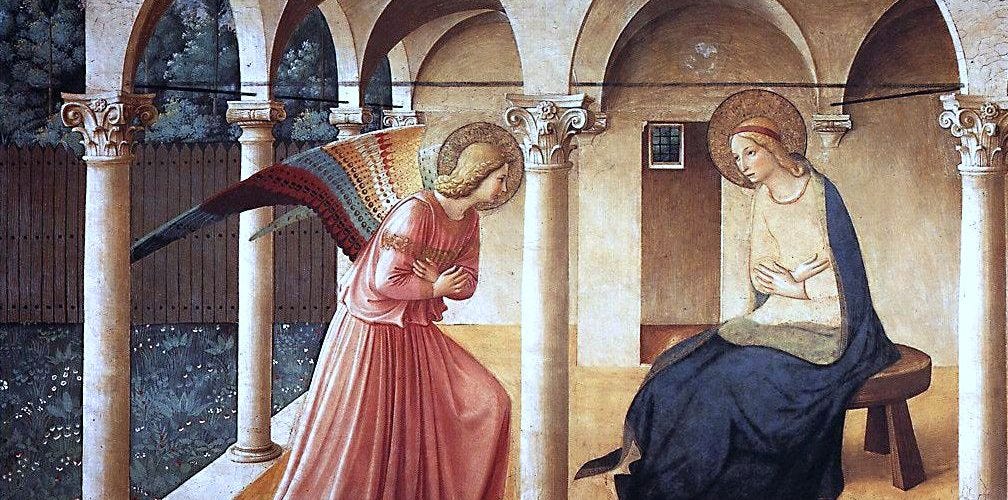
The Church has always heard in this ancient sentence the first quiet proclamation of the Gospel, because it dares to speak hope at the precise moment when hope appears least reasonable, announcing not an immediate erasure of sin but the slow, deliberate unfolding of a plan in which grace precedes, prepares, and ultimately outpaces the damage wrought by disobedience. It is no accident, then, that the liturgy places this reading beside the Annunciation, where the question Where are you? is finally met with an answer that does not hide—Behold, I am the handmaid of the Lord—a response so completely unguarded that it allows the Word Himself to take flesh without resistance.
Luke’s Gospel does not present Mary as powerful in any conventional sense, and yet the angel’s greeting reveals a mystery already accomplished before she speaks a single word: she is full of grace, not becoming so by her consent, but already shaped by a divine generosity that has anticipated every moment of her life. The Immaculate Conception is not a story about exemption from humanity, but about the most radical form of belonging, a preservation that exists entirely for the sake of Christ, ensuring that when the Son of God enters history, He does so through a humanity that has never learned to recoil from God’s presence. What was lost in Eden through fear is restored in Nazareth through trust, and the overshadowing of the Spirit answers the hiding among the trees with a dwelling that is freely given.
Paul’s hymn in Ephesians gives language to this mystery by pulling our gaze backward beyond time itself, reminding us that God’s choosing is not reactive but eternal, that holiness is not an afterthought but the original intention, and that grace is not distributed sparingly but lavishly “before the foundation of the world.” Mary stands at the center of this vision not as an exception that isolates her from the Church, but as its first and clearest realization, the one in whom election, adoption, and praise converge without fracture. In her, the Church sees not what it has achieved, but what it has been destined for all along.
This is why the psalm’s command to “sing to the Lord a new song” belongs so organically to this solemnity, because the newness it proclaims is not novelty but restoration, a song made possible by deeds so marvelous that they re-tune creation itself. Sacred music, at its most faithful, participates in this Marian logic: it does not force beauty where resistance remains, but receives beauty where grace has already prepared the ground. The Church sings not to manufacture holiness, but to give voice to what God has already begun, allowing sound to become a form of assent that echoes Mary’s own fiat across centuries.
The early Fathers understood this with remarkable clarity. St. Irenaeus spoke of Mary as the “cause of salvation for herself and for the whole human race,” not because she replaces Christ, but because her obedience unties the knot that Eve’s disobedience tightened, revealing that salvation unfolds through real human cooperation freely offered to divine initiative. Centuries later, St. Ephrem the Syrian would describe Mary as the “harp of the Spirit,” an image that remains startlingly apt for those entrusted with the Church’s music, because it suggests an instrument perfectly responsive to the touch of God, resonant not through effort alone but through availability.
The Church’s magisterium eventually gave doctrinal precision to what the liturgy had long sung. In Ineffabilis Deus, Pope Pius IX articulated the Immaculate Conception not as an isolated privilege, but as a grace ordered entirely toward Christ, emphasizing that Mary was redeemed in a more exalted way, preserved so that the Redeemer might be received without impediment. Later, Pope Paul VI’s apostolic exhortation Marialis Cultus would caution against Marian devotion that drifts into sentimentality or exaggeration, insisting instead that authentic Marian prayer always leads the Church more deeply into the mystery of Christ and into the disciplined beauty of the liturgy itself.
For those who plan, rehearse, and offer the Church’s song, this solemnity offers both consolation and correction. It reminds us that purity in sacred music is not primarily a question of style, but of orientation—whether our choices, our texts, our sounds make room for God to act before we do. Like Mary, the liturgy does not generate grace but is rather the vehicle for it; it receives it, shapes space for it, and gives it flesh through word, silence, and sound. To sing on this feast is to confess that God’s most decisive victories arrive quietly, that obedience can be radiant, and that the most powerful music the Church will ever offer begins with a yes that costs nothing less than everything.
Feast Day Spotlight
Color of Vestments — White
Solemnity of the Immaculate Conception — Grace Before the First Note
Celebrated on December 8, the Solemnity of the Immaculate Conception marks not the conception of Jesus, but the first moment of Mary’s own existence, when she was preserved from the stain of original sin in view of the merits of Christ. Historically, the feast developed slowly, defended passionately in the medieval period—especially by Bl. John Duns Scotus—before receiving dogmatic definition in 1854, though it had long been embedded in the Church’s prayer.
Theologically, the Immaculate Conception safeguards a crucial truth: salvation is entirely God’s initiative, yet never bypasses human freedom. Mary’s freedom is not diminished by grace; it is perfected by it, allowing her fiat to resound without distortion. For the Church’s liturgy, this feast underscores why beauty, discipline, and humility matter so deeply in sacred music: they mirror a soul prepared to receive God rather than compete with Him.
As Marialis Cultus reminds us, Marian feasts are meant to shape the Church’s worship, ensuring that devotion remains ecclesial, Christocentric, and rooted in the rhythms of the liturgical year. To sing on this solemnity is to confess that before the Church ever found her voice, grace had already been at work, tuning humanity itself to receive the Word made flesh.
Inspiration from across the internet.
My music of the week.
1) the absolute banger of this feast…