

Solemnity of the Assumption of the Blessed Virgin Mary Mass during the Day
Keeping the Magnificat Alive
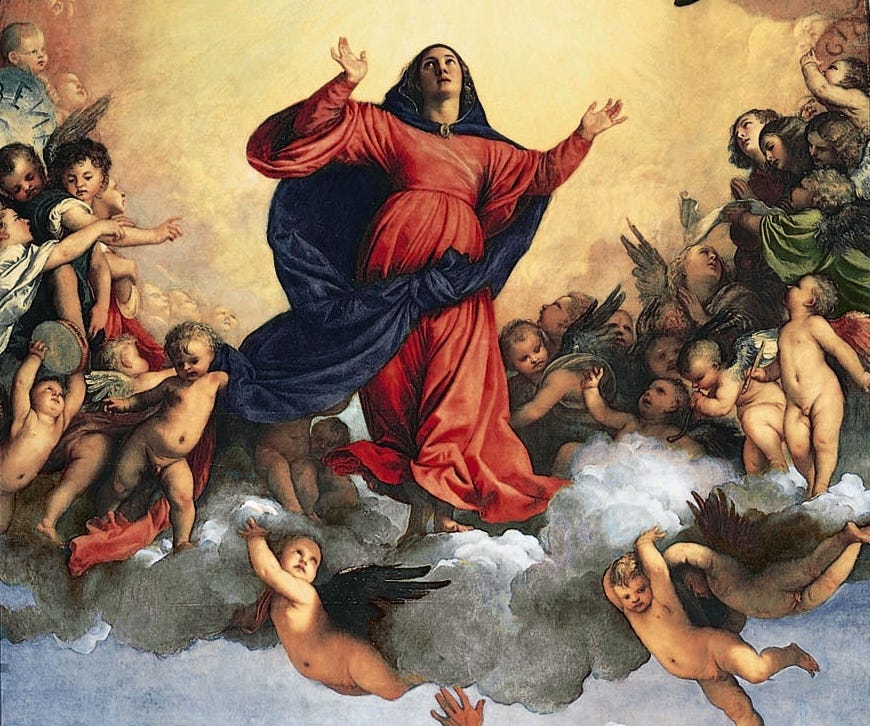
There is something quietly disarming about the vision of a woman clothed with the sun, the moon beneath her feet, and a crown of twelve stars upon her head—
not because the image is unfamiliar, but because it reveals a reality we are still learning to live inside of, a reality where heaven is not a far-off dream but an opened temple. Where the Ark of the Covenant is not a relic but a person, and where the story of salvation has already reached its victorious chapter even while we remain in the middle of its unfolding. John’s vision in Revelation does not hide the fact that there is a dragon—real opposition, real threat, a tail that can sweep away a third of the stars—yet the woman gives birth anyway, and the child is caught up to God, and the Kingdom is declared in heaven with a voice that is louder than fear.
Paul speaks the same truth from a different angle, insisting that Christ has already been raised from the dead, the first-fruits of those who sleep, and that in Him the last enemy—death itself—will be destroyed. But he also knows that we live in the space between the first-
fruits and the harvest, between Mary’s Assumption into glory and our own final union with God. Which is why Luke’s account of Mary’s Visitation matters so much: the Mother of the Lord, carrying Christ into Elizabeth’s house, does not speak of the dragon or the danger or even her own uncertainty—she magnifies the Lord, proclaims His mercy, remembers His promises, and sings. She sings not because the road is easy but because the road is sure.
And if we’re honest, sacred music often feels like that—singing in the space between the promise and its fulfillment, between the first note and the final chord, between the smallness of the present moment and the grandeur of the eternal liturgy we are meant to foreshadow. You stand there at the ambo or the organ or the choir loft, sometimes with more empty chairs than voices, sometimes with a congregation whose eyes do not meet yours, sometimes with the temptation to measure success by applause or visible enthusiasm; and yet you sing. Not because it feels triumphant, but because it is faithful. Because deep in your bones you know that to sing the Magnificat in the middle of the world’s dissonance is to side with heaven’s harmony, and to let your voice be woven into the great song that will one day fill the new creation.
The saints have always understood this tension. Augustine wrote that “singing is for the one who loves,” and Mary’s song is nothing less than love made audible. The Church’s teaching in Sacrosanctum Concilium does not treat sacred music as an embellishment to the liturgy but as “a necessary and integral part” of it, precisely because the liturgy is itself the song of the Bride to the Bridegroom, the echo of Mary’s own voice resounding in the Body of Christ. When you take up your psalter, your hymnal, your chant, you are not filling time; you are participating in the mystery of the Incarnation—the same mystery that lifted Mary, body and soul, into the life of the Trinity.
So perhaps this is the invitation of the Assumption: to remember that music in the liturgy is not background but foretaste, not ornament but prophecy. To keep singing even when the dragon waits at the door, even when the harvest feels far away, even when the Kingdom seems hidden. Because one day, as surely as Mary was drawn into glory, the Church will live in the presence of her King, arrayed in gold, and every note you sang in faith will find its place in the eternal hymn.
And maybe when that day comes, you will recognize the melody, because you have been singing it all along.
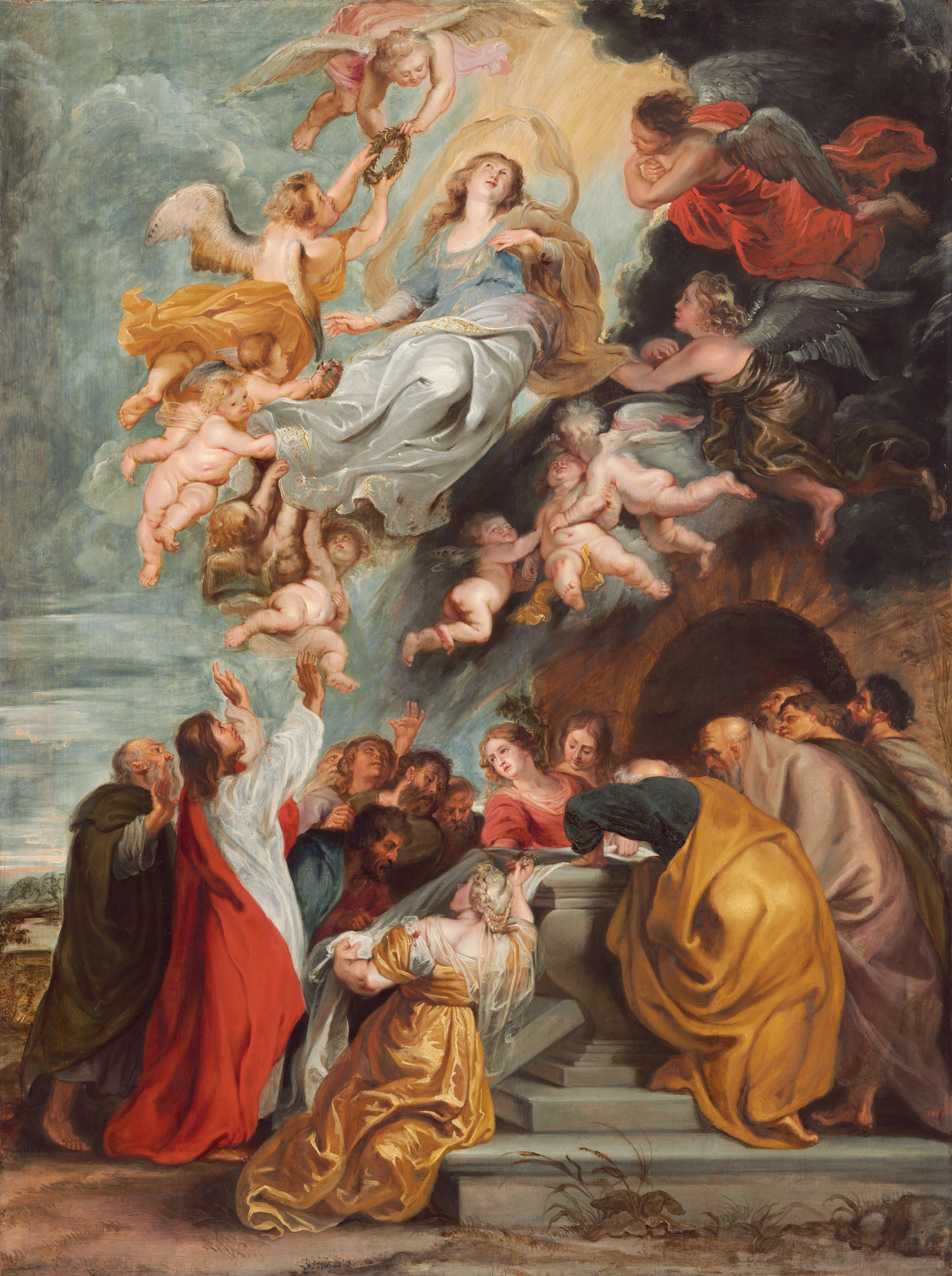
Inspiration from across the internet.
→ a great piece that I think fits with this solemnity from another faith tradition
→ a simple recap of accompaniment of hymns from the piano with variation
My music of the week.
2) here is some Grieg, maybe play for a wedding you have at the end of this summer season
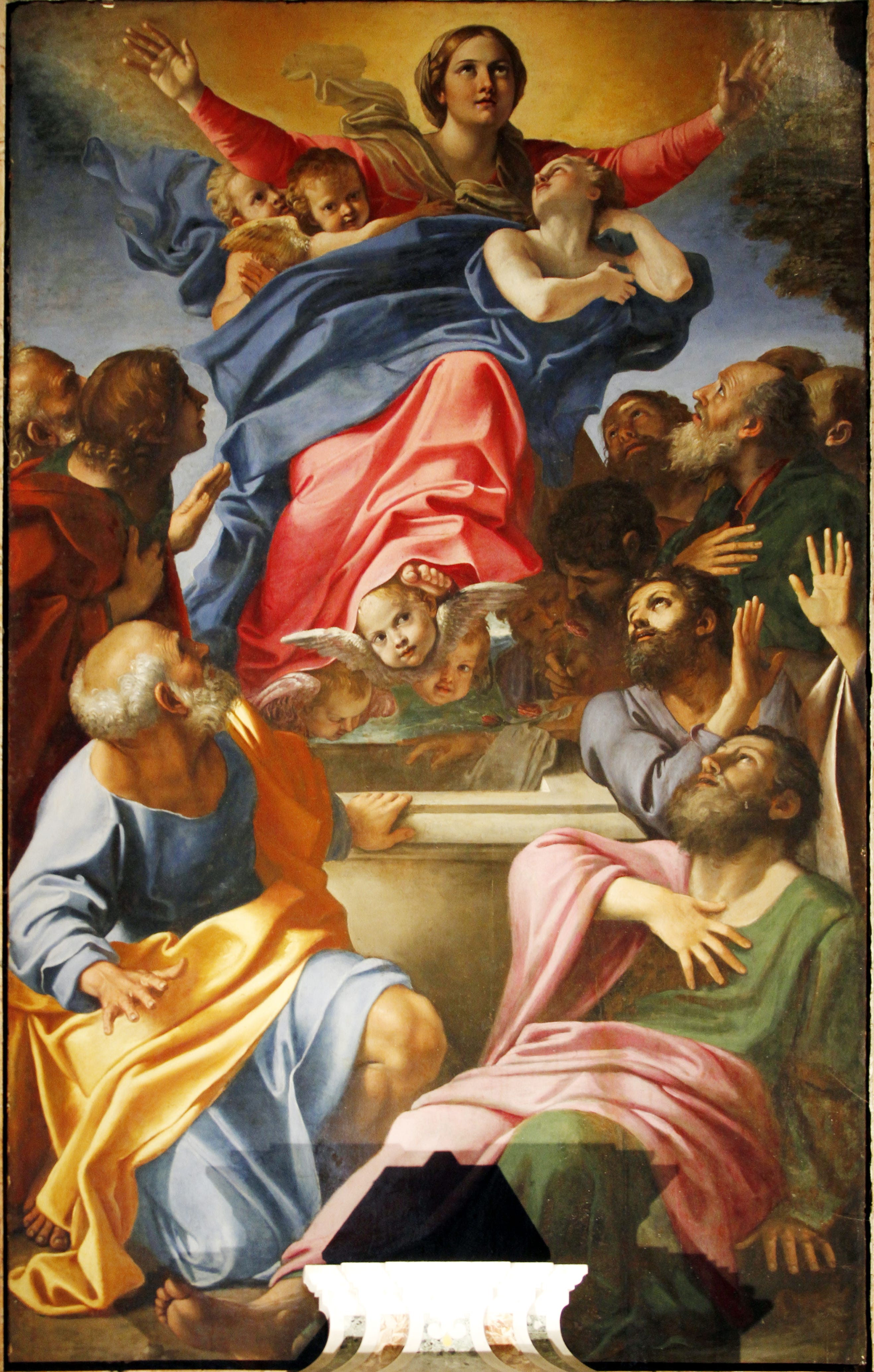
General Information - Información General
Color of Vestments - White
Color de Las Vestiduras - White
Song Recommendations
Entrance - Immaculate Mary (LOURDES HYMN) [sheet music] [audio]
Kyrie - Missa Portae Caelestis
Gloria - Missa Portae Caelestis
Responsorial Psalm - Psalm 45:10, 11, 12, 16
Gospel Acclamation - Mary is taken up to heaven; a chorus of angels exults.
Offertory - Song of Mary (D. Schutte) [sheet music] [audio]
Sanctus - Missa Portae Caelestis
Mysterium Fidei - Missa Portae Caelestis
Amen - Missa Portae Caelestis
Agnus Dei - Missa Portae Caelestis
Communion 1 - Holy Is His Name (J. Michael Talbot) [sheet music] [audio]
Meditation - Blessed are Those Servants (Madrigal)
Recessional - Hail Holy Queen (SALVE REGINA COELITUM) [sheet music] [audio]
Recomendaciones de Canciones
Entrance - Del Cielo Ha Bajado (AVE DE LOURDES) [sheet music] [audio]
Kyrie - Missa Portae Caelestis
Gloria - Missa Portae Caelestis
Responsorial Psalm - Salmo 44, 10bc. 11. 12ab. 16
Gospel Acclamation - María fue llevada al cielo y todos los ángeles se alegran.
Offertory - Como Estrella en Claro Cielo (S. Chávez-Melo) [sheet music] [audio]
Sanctus - Missa Portae Caelestis
Mysterium Fidei - Missa Portae Caelestis
Amen - Missa Portae Caelestis
Agnus Dei - Missa Portae Caelestis
Communion 1 - Quero Decir que Sí (L. A. Díaz-Britos) [sheet music] [audio]
Meditation - Listen to Him (Madrigal)
Recessional - Adios, Reina del Cielo (tradicional) [sheet music] [audio]
