

Solemnity of Saints Peter and Paul, Apostles
The Bread, the Priest, and the Blessing: A Corpus Christi Reflection

Years ago, I can remember a liturgy where I had a conversation with a pleasant lady who told me how much she misses singing the songs she did when she was a child. She described some to me, and she was shocked that I knew many of the old hymn tunes. There was one tune she did not know the words to, only the melody. At that time, the name of the tune was on the tip of my tongue, but I couldn’t name the tune for the life of me. I now know it was “Faith of Our Fathers.” A simple, yet profound hymn.
Sometimes, now, in silence, music and lines from these old hymns will come to me. I can hear not just my song, but the song of generations when I have these tunes. Music has that amazing power to connect the past to the present.
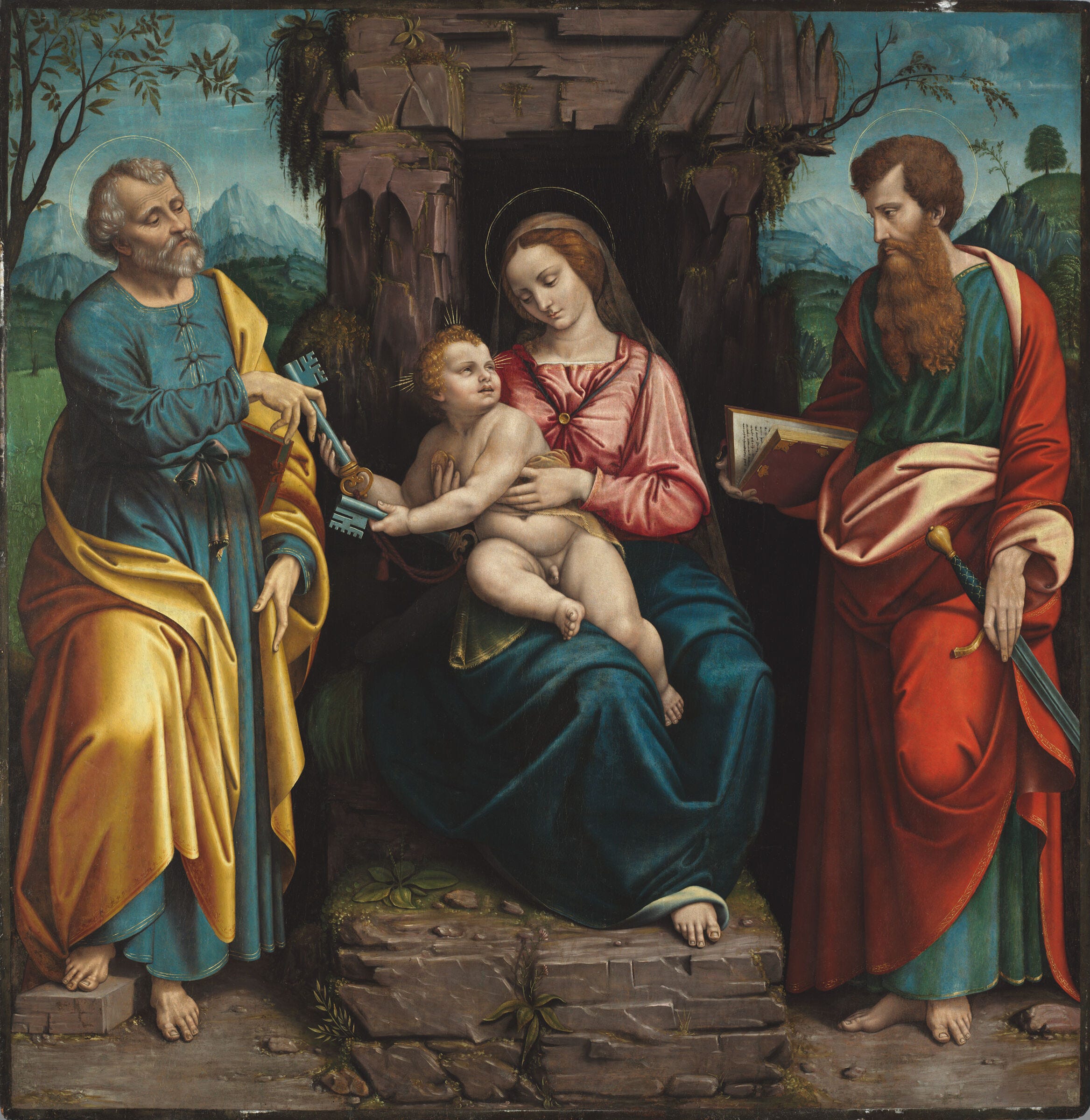
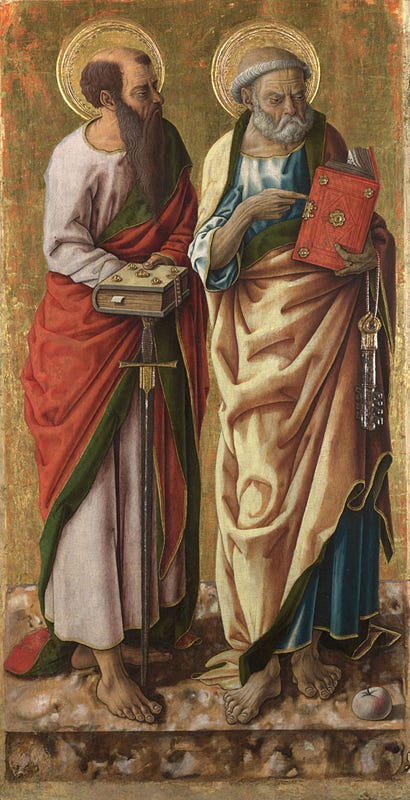
This week, we’re invited to go deep into the past — to prison cells, Roman swords, angelic visitations, and the edge of martyrdom. Saints Peter and Paul stand not as abstract pillars of the Church but as living, wounded voices — men who sang through the night, wrote through the darkness, and bled for the truth.
Here is a brief question to ponder as we go through the weeks review: What kind of music ministry is built on witness?
Peter: The Rock That Shook
In Acts 12:1–11, Peter is imprisoned by Herod. He’s bound in chains, watched by guards, locked behind gates. And yet, the Angel of the Lord appears, and “the chains fell from his wrists.”
This is not just a rescue, it is the presence of the Lord.
The Psalms echoes this:
“The angel of the Lord encamps around those who fear him, and delivers them.” (Ps 34:8)
Think about this for a moment, are our liturgies encounters of rescue? Or maintenance? When we sing the psalm this Sunday, we’re not just recalling a story — we’re participating in divine deliverance.
Paul: The Voice That Would Not Die
In 2 Timothy 4:6–8, 17–18, Paul knows the end is near:
“I have fought the good fight… I have kept the faith.”
But it’s the next part that hits hardest:
“The Lord stood by me and gave me strength, so that through me the proclamation might be completed and all the Gentiles might hear it.”
Even facing death, Paul is thinking about the transmission of the Gospel.
In the face of death, Paul does not keep silent, he amplifies the Gospel all the more.
This is our call too. As ministers of sacred music, we of course need to think of how we make the liturgy more beautiful. But our mission does not end there.
We’re carrying a torch passed from prison cells and martyrdom — a mission of proclamation that must be heard from silence.
Jesus: The Confession That Builds
Then there’s Matthew 16:13–19. Jesus asks,
“Who do you say that I am?”
And Peter speaks:
“You are the Christ, the Son of the living God.”
Christ’s response is staggering:
“You are Peter, and upon this rock I will build my Church….”
It’s the spoken word unlocking heavenly realities.
When Jesus speaks, it is efficacious.
“This is my body.”
“Get out of the man.”
“You are Peter,”
For music ministers: this is our blueprint. We sing and for tell of divine realities here on earth.
Proclaim the truth. Sing the confession. Open the gates.
Church History + Sacred Music
Throughout history, the Church has seen music not merely as embellishment, but as weaponry.
St. John Chrysostom called psalmody “a wall of safety” around the soul.
St. Ignatius of Antioch, on the way to his martyrdom, urged believers to sing “in unity” as if with one voice — a foreshadowing of heaven.
St. Augustine wrote: “Singing belongs to the one who loves.” And then later, the famous: “He who sings prays twice.”
In every age, songs under persecution are the most striking examples of devotion:
In the early Church, Christians sang the psalms quietly in the catacombs.
In Communist China, hidden house churches sang liturgical chants softly, fearing that neighbors might report them.
Even in our time, sacred music is a form of resistance — against indifference, against despair, against apathetic silence.
Church Documents on Mission + Music
Sacrosanctum Concilium (Vatican II):
“The musical tradition of the universal Church is a treasure of inestimable value, greater even than that of any other art.” (SC 112)
— Music is not ornament. It is mission and liturgy.Musica Sacra (1958) and Sing to the Lord (USCCB)
– Sacred music must “express the faith” and “encourage participation.”
– Participation isn’t just mouths moving — it’s hearts proclaiming.Evangelii Nuntiandi (Paul VI):
“Modern man listens more willingly to witnesses than to teachers.”
— Your voice, as a minister, must be a witness, not a performance.
This Sunday, remember Peter and Paul, and their witness to the faith to the very end.
Let your song carry the weight of chains fallen, oceans crossed, and swords faced with joy. Because sacred music isn't just about beautiful sound.
It’s about echoing the Church that bleeds, prays, and proclaims — even from prison. Even now.
For Your Reflection:
Have you ever sung something in Mass that you didn’t yet believe? What would it take to make it true in your life?
How can your ministry this week become a proclamation — not just a performance?
Inspiration from across the internet.
→ the other night, I rewatched the movie Silence, and this scene particularly spoke to me in light of the feast this week
My music of the week.
1) Enjoy Paul Fey playing the secret organ that is at the Trevi in Roma!
