

Sixteenth Sunday in Ordinary Time
Saints and Samaritans

There’s a moment after Communion, right before the final blessing, when time seems to slow. The music softens. The noise of the world waits just outside the church walls. In that moment, if you’re paying attention, you can feel the hush. Not the absence of sound, but the presence of stillness.
I’ve come to believe that most of our spiritual life is built around learning how to inhabit that stillness without rushing through it.
Martha didn’t know how. I don’t say that with judgment, she was doing exactly what I often do when ministry overwhelms me. She was serving. Coordinating. Getting the details right. Making sure everything was in place. She was doing what felt urgent.
And Mary wasn’t.
Mary was sitting. Listening. Silent, but not idle. Present.
Jesus doesn’t scold Martha for her work—He simply reveals what she’s missing. “You are anxious and worried about many things. There is need of only one.” I wonder how often we think we're choosing service when we're really just afraid of silence.
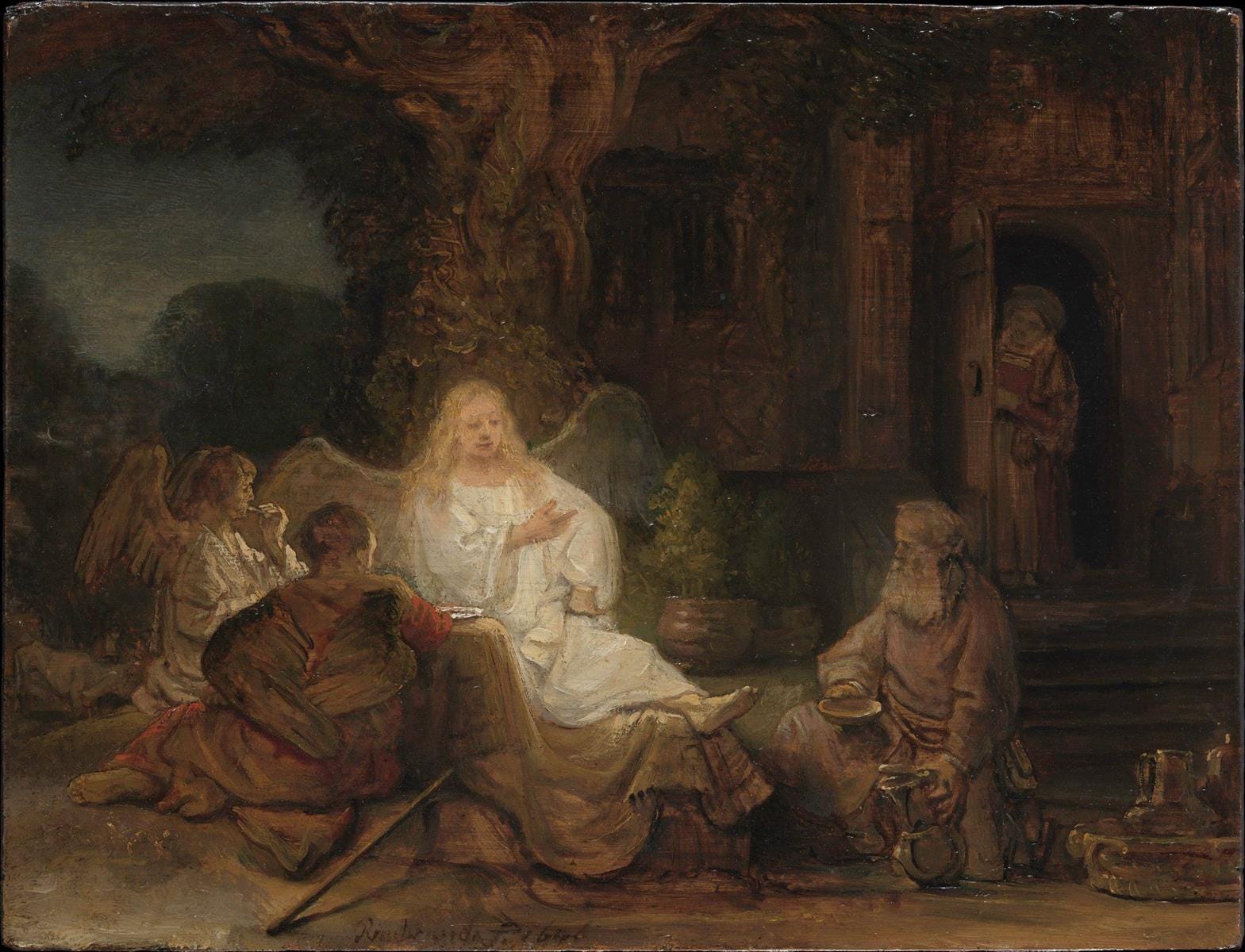
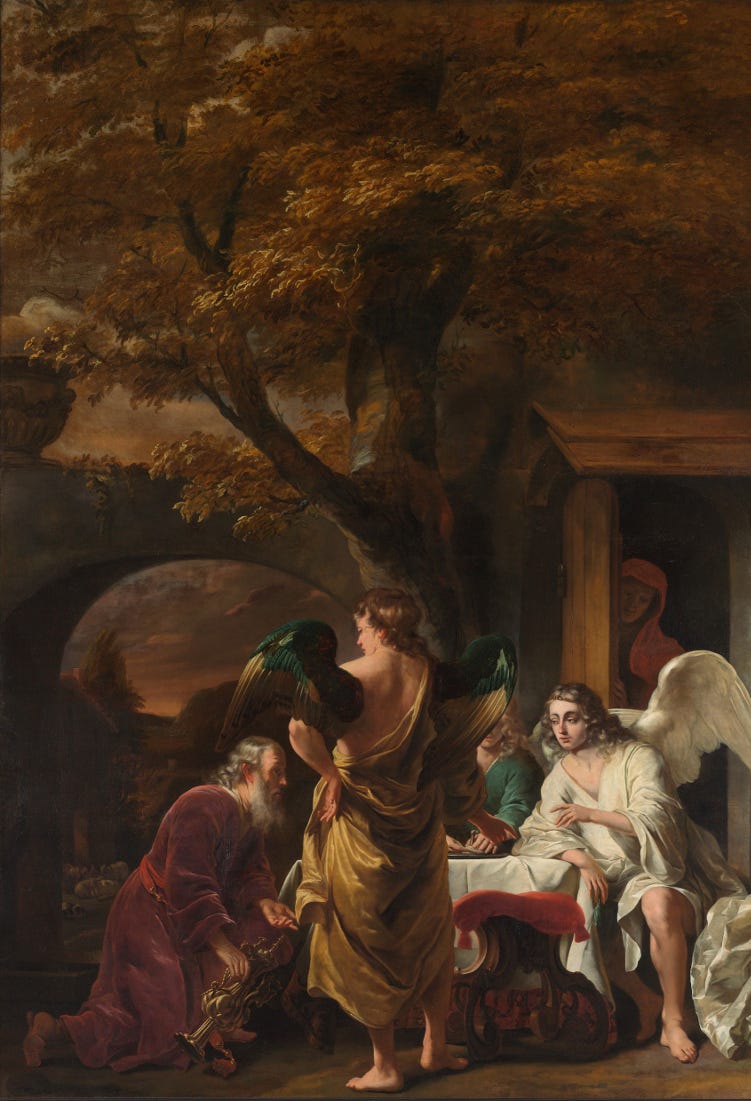
This week’s readings move through that tension—between doing and being, giving and receiving, speaking and listening. In Genesis, Abraham runs to greet the three strangers, bows, fetches water, orders bread, selects meat. (Did you see the Trinitarian theology there?) There’s a flurry of activity, yes—but what strikes me most is his posture. It isn’t frantic. It’s reverent. His haste is not anxiety—it’s hospitality. It’s devotion in motion.
He waits under the tree while they eat.
There’s something beautifully Eucharistic about that scene. Bread, milk, meat, presence. The Lord appearing in the guise of three travelers. It echoes the Emmaus story—another meal, another quiet moment of recognition.
And in Paul’s letter to the Colossians, we see the cost of such recognition. “I rejoice in my sufferings for your sake… filling up what is lacking in the afflictions of Christ.” It’s one of the most jarring lines in Scripture. How could anything be lacking in Christ’s afflictions? But Paul isn’t correcting theology—he’s revealing vocation. The body of Christ—broken, offered, sung, shared—continues in us. In our liturgies. In our sacrifices. Because there is nothing lacking in the Passion. We represent Calvary. In the ways we labor for the beauty of the Mass even when no one thanks us.
I think of the saints who lived that balance of Martha and Mary. St. Cecilia, whose music became prayer and whose prayer became witness. St. Benedict, who built a whole spiritual tradition around ora et labora—prayer and work. Or St. Teresa of Ávila, who scrubbed dishes and levitated in ecstasy, sometimes on the same day.
The Church has never asked us to stop working. It’s asked us to remember why we’re working.
Sacrosanctum Concilium teaches that sacred music has a “ministerial function” in the liturgy—it is not mere ornament, but participation in Christ’s priestly work. It is both the voice of Martha—serving through sound—and the voice of Mary—resting in awe. When we plan music that truly serves the liturgy, when we rehearse not just for performance but for prayer, we do what Abraham did: we prepare a feast for God, and we linger under the tree as He eats.
But we live in a world addicted to movement. Music ministers feel it more than most. There’s pressure to impress, to be relevant, to make every liturgy feel like a curated event. But the liturgy isn’t a production—it’s an encounter. And sometimes the most powerful thing we can do is step back, simplify, and let the mystery unfold without forcing it.
This week, maybe your gift to your parish is not just the notes you play or the harmonies you arrange, but the stillness you create around them. Maybe it’s in choosing a Communion chant that leaves space for silence. Or a responsorial psalm that invites the congregation to really listen. Maybe it’s in pausing during rehearsal to remind your team that what you’re doing matters—even when it’s hidden.
The better part isn’t always glamorous. It doesn’t always look productive. But it’s the part that remains when everything else fades.
So sit at His feet this week. And when you stand again to serve, let it be from a place of love, not anxiety. That’s the difference between performance and offering. That’s the difference between being busy and being faithful.
Because in the end, our music is not for applause—it’s for presence.
And presence is everything.
Inspiration from across the internet.
→ I am not sure how people can see this, and not marvel at human achievement. (especially when it is inspired from music)
→ I think that everyone will find this interesting!!! St. Thomas Becket, Ora pro nobis.
