Second Sunday in Ordinary Time
When the Church Learns to Sing by Pointing Away from Herself
There is something quietly arresting about the way this Sunday refuses to introduce Christ through spectacle, miracle, or proclamation from heaven,
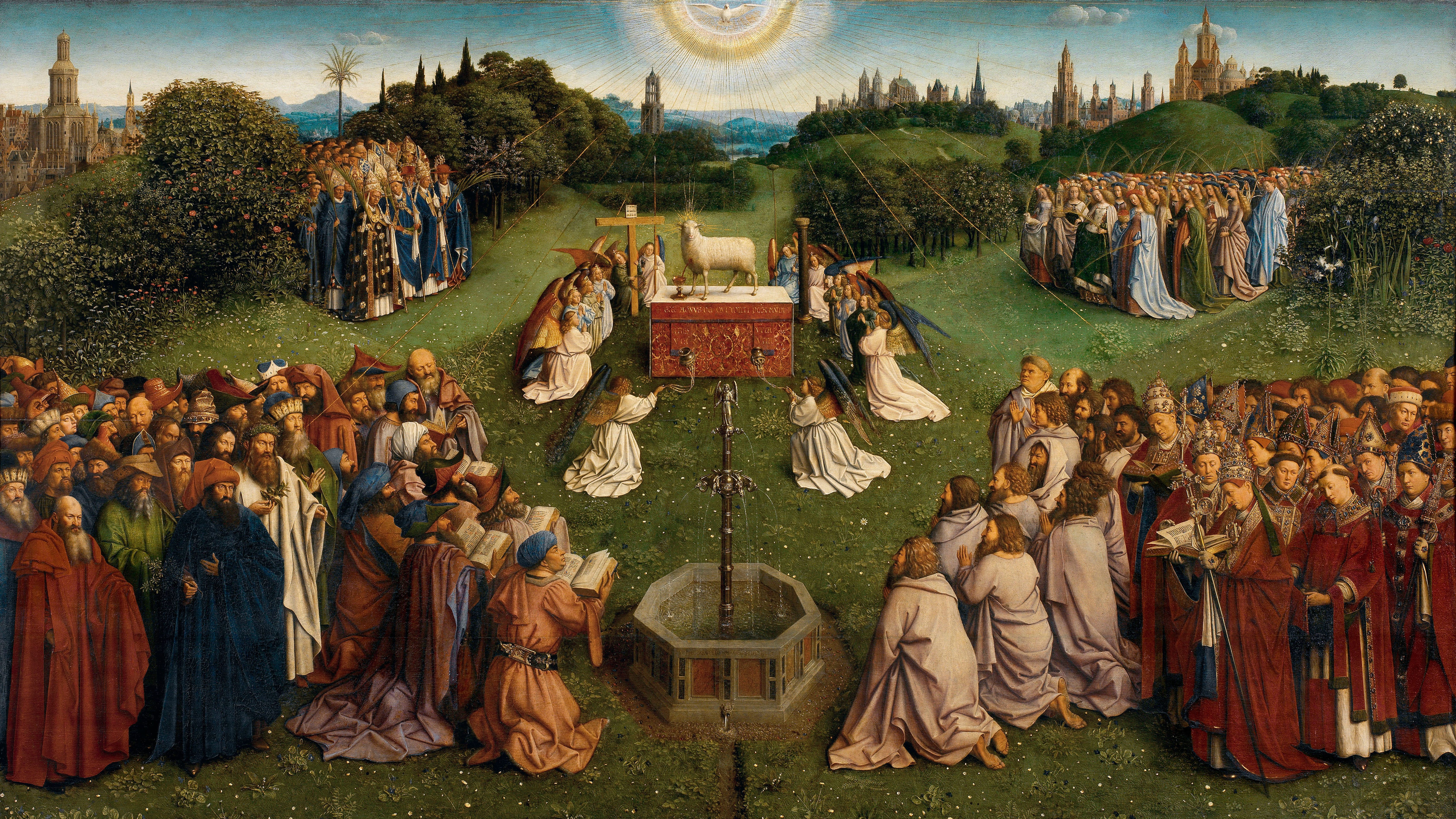
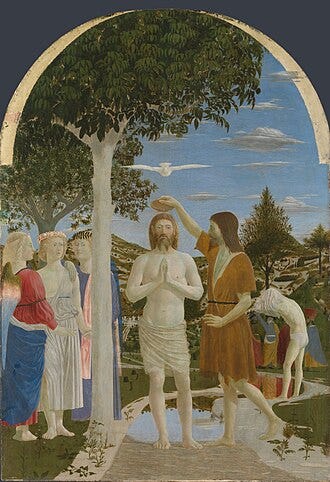
and instead places Him before us through the testimony of a man whose entire vocation was to point away from himself, because the Gospel does not begin with Jesus speaking but with John the Baptist looking, recognizing, and finally surrendering his voice to a single sentence that contains the weight of the world: Behold, the Lamb of God.
Isaiah had already prepared us for this moment by revealing a servant who belongs wholly to the Lord before he ever belongs to a people, a servant formed from the womb not merely to gather Israel back together but to become light for the nations, a vocation that stretches salvation beyond borders, expectations, and even religious familiarity, until God’s glory is no longer something possessed but something radiated. This is not a calling rooted in efficiency or visibility but in availability, in being claimed by God so completely that one’s life becomes a place through which divine mercy can travel outward, even when the servant himself remains hidden.
The psalm gives voice to what that vocation feels like from the inside, because obedience here is not framed as grim duty or resignation but as song, as the strange discovery that when the ears are opened to listen, the mouth is filled with praise, and the will of God becomes not an external demand but an interior delight. “Here am I, Lord; I come to do your will” is not a declaration of control but of consent, the acknowledgment that the truest freedom is found not in self-definition but in letting one’s life be received and directed by Another.
Paul, writing to the fractured church in Corinth, quietly reinforces this truth by reminding them that holiness is not an achievement earned through distinction but a gift conferred through communion, because they are called to be holy together, addressed by the same grace, sustained by the same peace, gathered not around personalities or preferences but around the name of Jesus Christ, who is Lord of all. The Church, like the servant of Isaiah, exists not for itself but for witness, and its unity is itself meant to be a sign that God’s saving work is not limited to one people, one culture, or one voice.
And then John speaks again, this time not as a preacher but as a witness, confessing that he did not know Jesus until the Spirit revealed Him, until obedience preceded understanding, until fidelity came before clarity. The Lamb is revealed not through dominance but through descent, not through argument but through presence, and the Spirit does not rush in and leave but remains, teaching us that God’s glory is not a momentary flare but a sustained dwelling. For those entrusted with the Church’s song, this detail matters deeply, because sacred music is not meant to impress or persuade but to remain, to dwell with the Word made flesh, to testify to what has been seen rather than manufacture what has not.
The Church has always known that music belongs to this kind of witness. Long before debates about style or relevance, she understood that sung prayer is a form of obedience, a way of saying here am I with breath and body, allowing the voice to become an offering shaped by the liturgy rather than an interruption imposed upon it. Tra le Sollecitudini insists that sacred music must possess holiness and goodness of form precisely because it participates in the Church’s mission of revelation, not by adding to Christ but by pointing toward Him, just as John did, with restraint, clarity, and humility.
So perhaps this Sunday offers a quiet but demanding invitation to every priest and music minister who feels the pressure to be novel, impressive, or indispensable, reminding us that our task is not to replace the Lamb with our own voices but to recognize Him, name Him, and then decrease so that He may be known. Because when the Church sings from this place—rooted in obedience, formed by listening, and oriented toward witness—she becomes what she was always meant to be: a servant through whom God’s glory passes outward, reaching farther than we could ever plan.
And if we are faithful to that posture, we may discover that the most enduring music we offer is not what draws attention to itself, but what leaves behind the unmistakable trace of Christ.
Feast Day Spotlight
Color of Vestments
GreenLiturgical Note
The Second Sunday in Ordinary Time shifts the Church’s gaze from Christ’s manifestation to His mission, identifying Him not simply as Messiah or Son but as the Lamb whose life will be offered for the salvation of the world. From the earliest centuries, this title shaped Christian liturgical consciousness, binding together Incarnation and Sacrifice, Nativity and Paschal Mystery, in a single theological arc.Historical / Theological Insight
St. Cyril of Jerusalem taught that Christ is called the Lamb because He fulfills both the Passover sacrifice and Isaiah’s suffering servant, revealing that redemption comes not through force but through self-gift.Why This Matters for Sacred Music
Echoing this, Sacrosanctum Concilium affirms that the liturgy makes present the work of our redemption, and sacred music serves this mystery best when it allows the voice of Christ to be heard more clearly than our own.
Inspiration from across the internet.
My music of the week.