

Glimpsing the Heavenly Liturgy
Second Sunday of Lent—The Transfiguration and the Discipline of Trust
There is a particular kind of silence that happens after a truly beautiful liturgy.
Not the polite quiet of people waiting for announcements. I mean the kind that lingers in the sacristy. Musicians finish the postlude and no one rushes to speak. The priest removes the chasuble slowly. The air is thick with the grace imparted.
And by Tuesday, you are back to rehearsal schedules, budget constraints, volunteers who didn’t show up, and the creeping suspicion that whatever that was on Sunday cannot be engineered again.
The Second Sunday of Lent always meets us in that space.
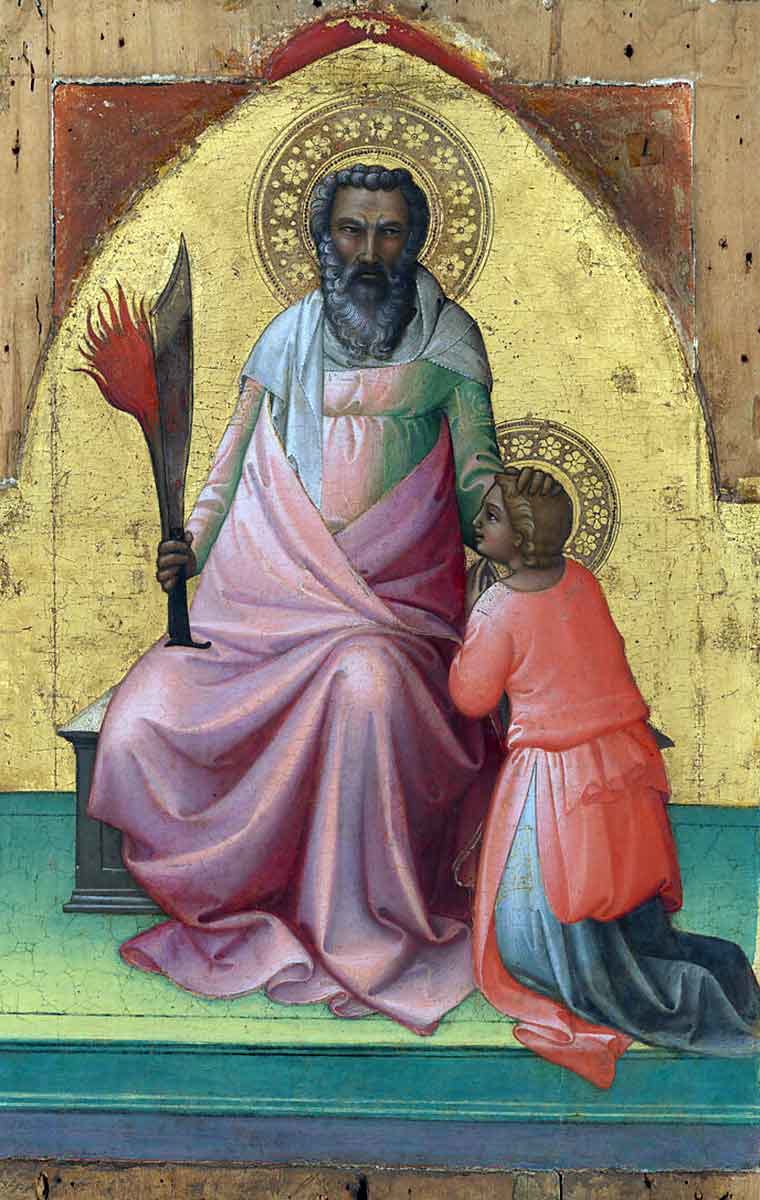
Abram hears a command that sounds reckless: “Go forth… to a land that I will show you.” No map. No guarantee except a promise that his obedience will become blessing for “all the communities of the earth.” And the text is almost offensively simple: “Abram went as the LORD directed him.” No analysis. No delay. He walks into a future he cannot yet see because he trusts a foreign God, the One who speaks.
Paul, writing to Timothy, intensifies the pattern. “Bear your share of hardship for the gospel.” The holy life is not built from our competence but from “his own design,” a grace “bestowed… before time began” and now made manifest in Christ. The initiative is always God’s. The risk is ours.
Then the mountain.
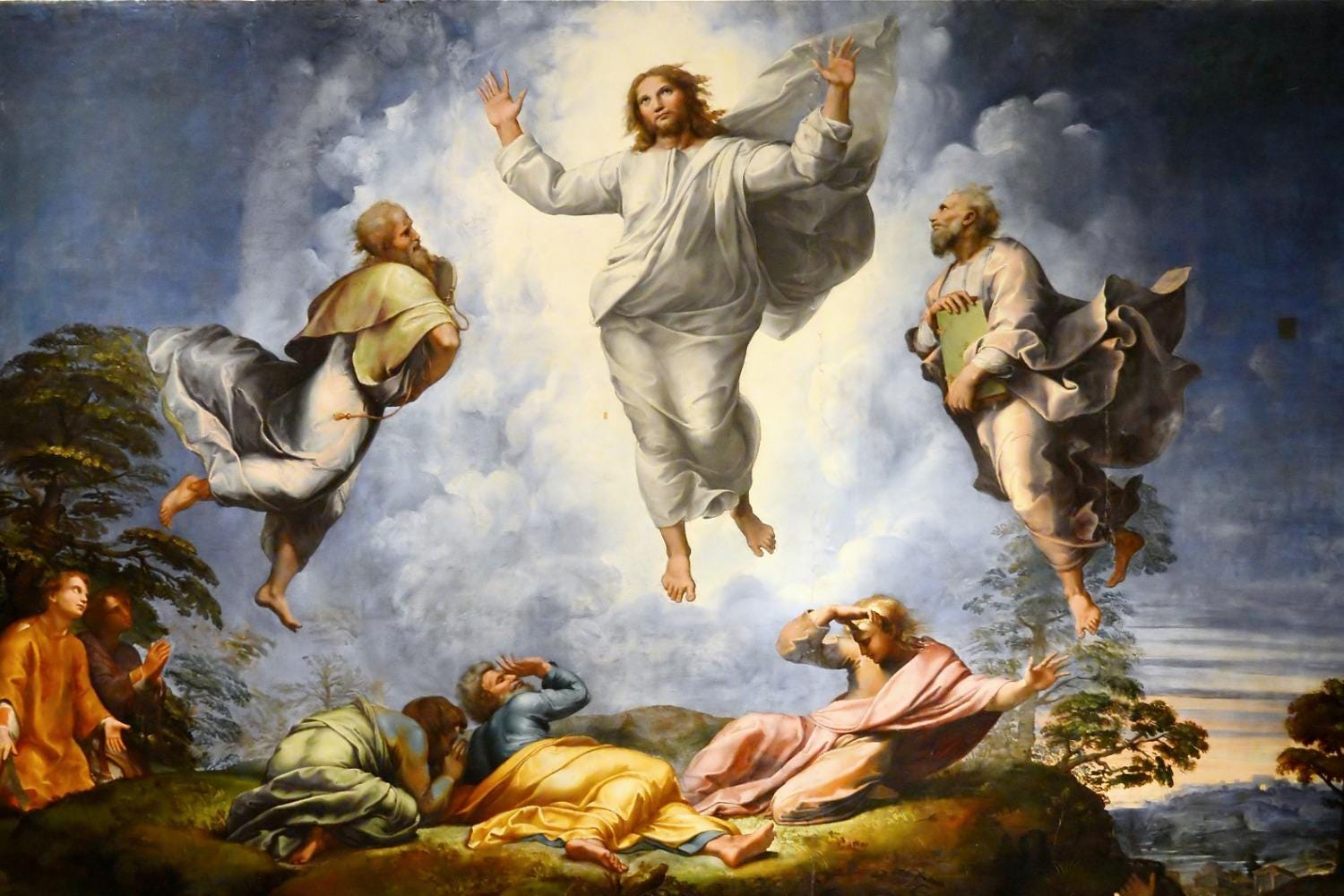
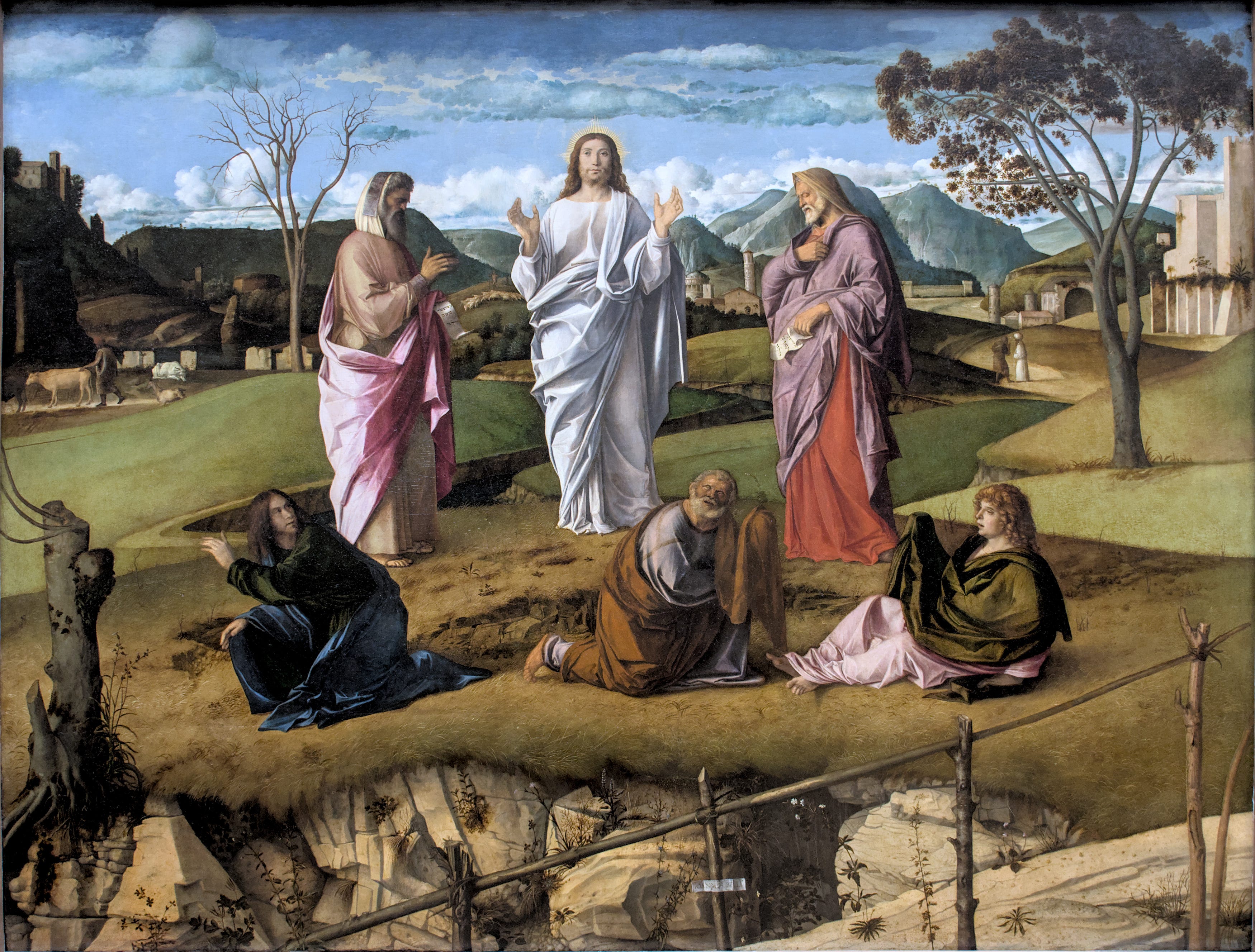
The Transfiguration is one of those moments in the Gospels that feels almost liturgical in structure. A high place. Chosen witnesses. A visible transformation. The Law and the Prophets in conversation. A cloud. A voice. Fear. Prostration. And finally, a command: “Listen to him.”
Peter’s instinct is familiar to anyone who has ever experienced a moment of liturgical clarity. “It is good that we are here. If you wish, I will make three tents.” In other words: stay. Let’s capture this, whatever this is.
But the Father does not affirm the tents. He directs attention. “This is my beloved Son… listen to him.”
The glory is real. But it is not given to be contained. It is given to be received.
The Church has always read this Sunday as preparation for scandal. The light of Tabor precedes the darkness of Calvary so that when obedience looks like failure, the disciples will remember what they saw. St. Leo the Great preached that Christ revealed his glory “so that the scandal of the cross might be removed from the hearts of his disciples.” The vision was not an escape; it was a fortification.
For those who serve the liturgy week after week, this is not just abstract theology. It names the tension felt week after week. You have seen what the liturgy can be when it is prayer rather than performance, when chant or polyphony opens the text instead of decorating it, when silence is not awkward but charged. You have seen faces attentive, postures aligned, the assembly actually listening.
And then you descend.
You return to limited rehearsal time, uneven skill levels, cultural expectations, and the quiet pressure to produce something impressive rather than something faithful. The temptation is either to build tents—replicate peak experiences at all costs—or to lower expectations and call mediocrity “pastoral.”
The Transfiguration corrects both instincts.
First, it clarifies that beauty in the liturgy is not self-generated radiance. It is participation in a glory that precedes us. As the Constitution on the Sacred Liturgy, Sacrosanctum Concilium, teaches, in the liturgy “the sanctification of man is signified by signs perceptible to the senses and effected in a way which corresponds with each of these signs.” The signs do not manufacture glory; they mediate it. Our task is fidelity to the signs, not control over the outcome.
Second, it reframes hardship. Paul’s exhortation to “bear your share of hardship” is not motivational rhetoric. It is structural. If Christ’s glory is revealed precisely in obedience that passes through suffering, then the unglamorous labor of weekly preparation is not an obstacle to beauty; it is its apprenticeship. Rehearsals, careful repertoire planning, disciplined attention to texts, the slow cultivation of a parish’s musical memory—these are not peripheral tasks. They are the descent from Tabor into lived hope.
Most parishes do not fail because they lack passion. They falter because they lack continuity. Beauty requires memory. And memory requires structure. Abram’s journey did not become blessing in a day; it unfolded across generations. The same is true of liturgical culture. One luminous Sunday does not form a people. Repeated listening does.
Notice the final detail of the Gospel: “They saw no one else but Jesus alone.” Moses and Elijah disappear. The cloud lifts. The extraordinary collapses into the “ordinary” presence of Christ.
He is the center.
If our liturgical decisions—musical, ritual, aesthetic—do not make it easier for our people to “see no one else but Jesus alone,” then no amount of brilliance will compensate. And if they do, even imperfectly, then the descent is not failure. It is fidelity.
You will not live on the mountain. Neither did Peter. But you are allowed to remember it. And you are commanded to listen.
That is enough to keep walking.
Ars Musica Sacra is a reader-supported publication. To receive new posts and support our work, consider becoming a free or paid subscriber.
Feast Day Spotlight — Second Sunday of Lent
The Transfiguration has long been read as a revelation of Christ’s divine sonship precisely at the moment when the shadow of the Passion begins to lengthen in the Gospel narrative. In the East, this feast developed early as a distinct celebration; in the West, its placement within Lent became a theological anchor: illumination before immolation.
St. Leo the Great preached that in the Transfiguration, “the principal aim was to remove the scandal of the Cross from the hearts of his disciples.” Glory is not opposed to suffering; it interprets it.
The Constitution on the Sacred Liturgy, Sacrosanctum Concilium, reminds us that in the liturgy “Christ is always present in his Church, especially in her liturgical celebrations.” The light of Tabor is sacramental presence—real, though veiled.
The Church does not build tents around isolated experiences of beauty. She builds a rhythm of Word and Sacrament that slowly teaches the faithful how to listen.
Share these Ars Musica Sacra insights with others for the celebration of this liturgy!
Inspiration from across the internet.
→ this was a video that I loved for the artistry
My music of the week.
Ars Musica Sacra is supported by readers like you. Join our community and engage with other readers by sharing your thoughts and contributing to community discussions!

Have thoughts on what we shared here? Or maybe questions on some liturgy or theology points? Leave a comment and engage with other readers.