

Fragile Faith After Easter?
Sunday of Divine Mercy—Belief maturing through encounter
Quiet, anyone?
The week right after Easter can sometimes feel quiet at a parish. Not so much that the joy of Easter has passed, but more that the enthusiasm for it has. In the hearts and minds of some, the question may even pop-up, “was that it?” And in many ways, it is valid when they look at the lived reality around them. But Holy Mother Church in her wisdom gives us the answer to this very question in the Sunday liturgy following Easter. Divine Mercy.
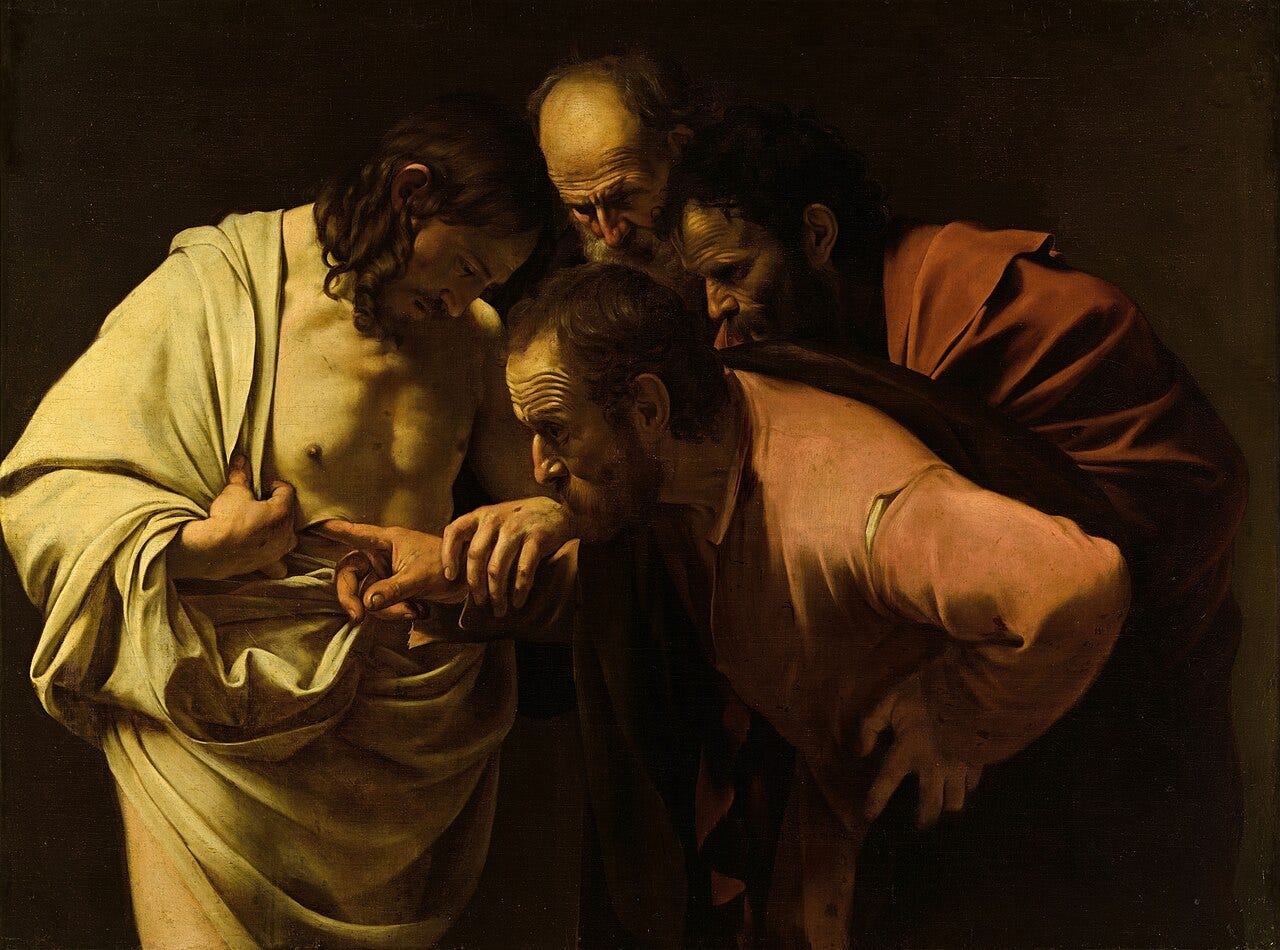
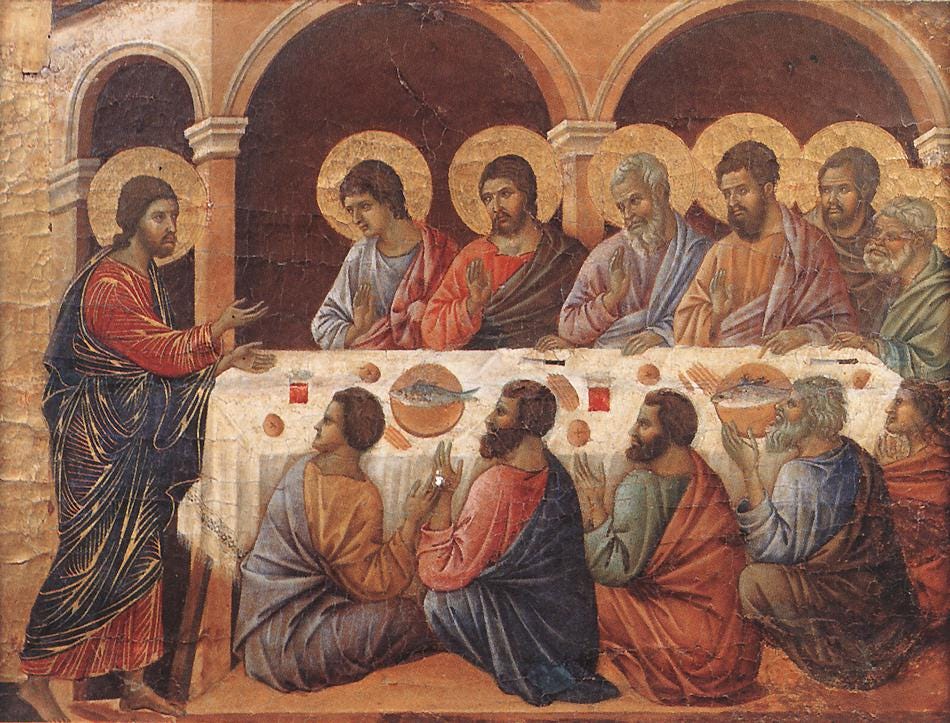
When we look at the readings for the liturgy today, we might find the disciples much like ourselves. We have just encountered the Risen Christ! Then why is the parish empty? In many ways, we, like them, are hiding in the dark. We, only a week removed, are not in the streets trying to evangelize. We have instead returned to our normal. The one that is all too comfortable. Their fear and our fear are related in this mystical way, and still, Christ comes. He comes to offer us His peace. And more than this, He shows us His wounds, that we might see and believe.
For God to show the disciples, to show us, once more the wounds He bore, reveals a great and deep mystery to us all. In the wounds of Christ, where the world found it’s redemption, we also find our reinvigoration. Resurrection takes the marks of the Passion and turns them into something more, it transfigures them. For in the encounter with the Risen Christ, we move not just from doubt to certainty, but we also move from a position of distance to a position of encounter.
This is the moment where we can all fall in love with Thomas. The disciple who doubts the most, and after encounter, is willing to go the farthest (to India, as tradition holds). Thomas is not rebuked by Our Lord for his lack of faith; rather he is invited to touch, and to believe. And it is through this invitation that we hear these words spoken of Christ for the first time:
“My Lord and my God.”
If we look then to Acts, we see that even the early Church is built on encounter. Especially encounter that is regular. A Church that is built day after day, meal after meal, and prayer after prayer. This is the life of the Church being built one encounter at a time. And this is the tension that we can see in the modern parish.
Modern parish life can make is feel like we need dramatic encounter. When we see empty pews right after Easter, we might be tempted to think, “we need more encounter, greater encounter!” And lets face it, it may be a good thing! But more than this, the Sunday of Divine Mercy teaches us that it is regular encounter that does the most work. For it is only when we regularly encounter the Risen Christ that we are fed enough to feed others. And it is through the grace of God alone that our encounters with Him bear fruit.
Let us all trust in the Divine Mercy of God, and that our Easter encounter may continue for all the days of our lives.
Ars Musica Sacra is a reader-supported publication. To receive new posts and support our work, consider becoming a free or paid subscriber.
Feast Day Spotlight
Second Sunday of Easter—Divine Mercy Sunday
Instituted more explicitly in the modern calendar through the influence of Saint Faustina Kowalska, this Sunday emphasizes not only the reality of mercy, but its mode: it is given through encounter.
The Gospel itself reveals the sacramental dimension of this mercy. Christ breathes on the apostles and entrusts them with the forgiveness of sins—linking the Resurrection directly to the life of the Church.
Traditionally, this day was also part of the “mystagogical week,” where the newly baptized continued to unpack the sacraments they had just received.
As articulated in the Catechism of the Catholic Church:
“The sacraments are ‘powers that come forth’ from the Body of Christ… they are actions of the Holy Spirit at work in his Body, the Church.”
Mercy is not an idea to grasp.
It is a reality to be received, again and again.
Share these Ars Musica Sacra insights with others for the celebration of this liturgy!
Ars Musica Sacra is supported by readers like you. Join our community and engage with other readers by sharing your thoughts and contributing to community discussions!

Have thoughts on what we shared here? Or maybe questions on some liturgy or theology points? Leave a comment and engage with other readers.