Fourth Sunday of Advent
Joy Before Resolution: Singing Hope While the Gates Are Still Closed
There is something almost unsettling about the final sign God gives before the silence breaks—
not a spectacle in the heavens or a triumph before enemies, but a child conceived quietly, entrusted not to certainty but to obedience, and announced first not to crowds but to a righteous man asleep—because the Fourth Sunday of Advent does not resolve the tension of waiting so much as concentrate it, drawing our attention away from the public drama of prophecy and toward the interior courage required to receive Emmanuel when He comes without explanation or control. Isaiah’s promise to the house of David is spoken into exhaustion and reluctance, into a king who refuses to ask for a sign not out of reverence but out of fear, and it is precisely there that God insists on giving one anyway: a virgin shall conceive, and God will be with His people not as an idea or symbol, but as flesh that must be protected, named, and welcomed into a home.
Paul’s opening words to the Romans echo this same mystery from a different register, proclaiming that the Gospel is not an improvisation but a fulfillment, promised through the prophets, rooted in David’s lineage, and revealed in power not through dominance but through resurrection. What emerges is a vision of faith that is not based on abstract assent, but obedience—the obedience of faith, as Paul names it—an obedience that listens before it understands, receives before it explains, and trusts before it can see how the story will unfold. The Church stands here at Advent’s edge, holding together ancient promise and imminent presence, knowing that once Emmanuel arrives, nothing can or will remain the same.
Matthew’s Gospel places us squarely inside that moment of decision by turning our gaze toward Joseph, a figure whose silence speaks louder than many proclamations. He is righteous not because he is flawless, but because he chooses mercy when certainty collapses, because he refuses to weaponize the law when love demands restraint, and because when the angel finally speaks, Joseph does not debate the command—he wakes, he acts, and he takes Mary into his home. His obedience is not dramatic; it is durable. It makes space for God to dwell where God has chosen to arrive.
For those entrusted with the Church’s music, this scene offers a sobering mirror, because liturgical ministry so often unfolds in precisely this hidden register, where fidelity matters more than recognition, where the most consequential acts happen offstage, and where the call is not to control the mystery but to shelter it. Advent music at this point does not seek emotional climax; it leans into reverence, allowing silence, restraint, and expectation to do their quiet work. Psalm 24’s ancient summons—Let the Lord enter; he is king of glory—is not a triumphal chant shouted from above, but a question asked of the heart: who may ascend, who may stand, who is willing to open the gates?
The tradition of the Church has long understood that such preparation is inseparable from how the Church sings. St. Ambrose, whose hymns shaped the Western Church’s prayer in moments of doctrinal tension, taught that sacred song forms the soul precisely by training it to receive truth before mastering it, allowing melody to soften resistance where argument alone cannot. Music, when rightly ordered, does not rush the mystery; it keeps watch. This is why the Church insists, as articulated in Musicam Sacram, that liturgical music must serve the rite rather than dominate it, fostering a reverent attentiveness that makes room for God’s action rather than substituting human expression for divine presence.
The Fourth Sunday of Advent, then, is less about anticipation than consent. It asks whether we are willing, like Joseph, to trust that God’s nearness will disrupt our plans, rearrange our expectations, and ask us to act without applause. It reminds us that Emmanuel does not enter by force, but by invitation, and that the Church’s song at this threshold must be shaped by humility rather than volume, by fidelity rather than flourish.
And perhaps this is the final grace of Advent: that by the time the angels sing over Bethlehem, the Church has already learned how to listen, how to obey, and how to prepare a dwelling place where God can truly be with us.
It should feel like something we have been rehearsing all along.
Feast Day Spotlight
Color of Vestments — Violet
Fourth Sunday of Advent — The Threshold of Emmanuel
The Fourth Sunday of Advent stands at the Church’s most compressed moment of expectation, where prophecy, promise, and presence converge with almost unbearable closeness. Liturgically, it turns decisively toward the mystery of the Incarnation, inviting the faithful not merely to await Christ’s coming, but to contemplate the manner of His arrival—hidden, entrusted, and dependent upon human obedience.
Theologically, this Sunday highlights the role of just reception rather than heroic action. St. Bernard of Clairvaux famously reflected that the fate of humanity seemed to hang upon Mary’s consent, but the same can be said of Joseph’s obedience, which safeguarded the mystery once it entered the world. His quiet fidelity reveals that holiness often consists not in speech, but in sheltering what God has begun.
The Church’s liturgical norms echo this disposition. Sacrosanctum Concilium teaches that the liturgy “requires a noble simplicity,” a principle that reaches its fullest expression here, where the Church resists excess in order to remain attentive. For musicians and priests, the Fourth Sunday of Advent offers a precise directive: let the music prepare the house, open the gates, and step back—because Emmanuel comes not to be announced with noise, but to be received with trust.
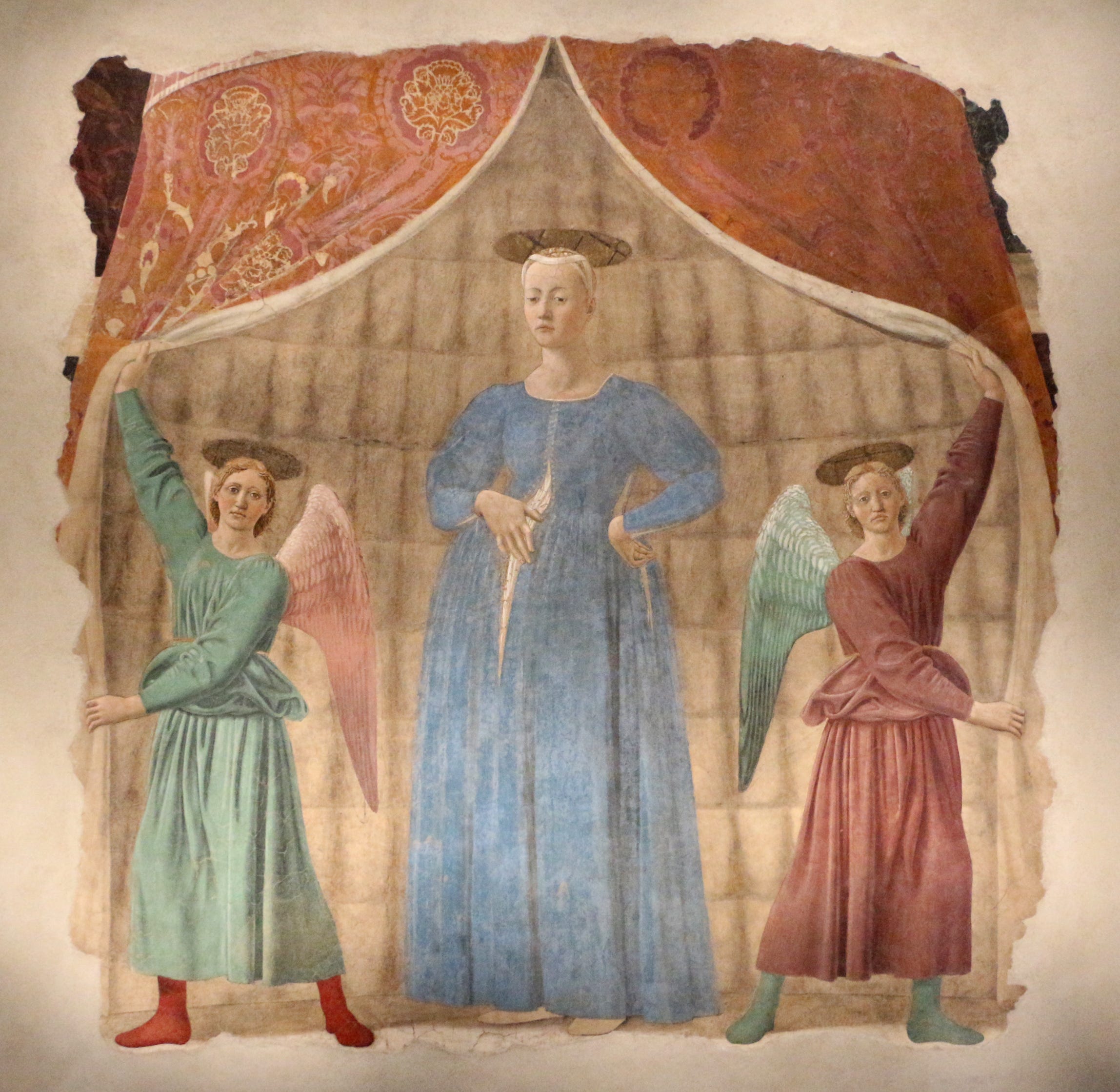
Inspiration from across the internet.
My music of the week.
1) a lovely little hymn to St. Joseph that I see many have adopted as their “work hymn”