

Fifteenth Sunday in Ordinary Time
Saints and Samaritans


As a musician, I have put in my time in choir lofts across the world. I remember a quiet evening in one choir loft, the congregation’s voices just fading into the nave from the recessional hymn. My mind and body lingered on the keys of the console, wanting that soft sound to continue forever. Then, I let go. In that moment of repose, I sensed something of what is described in this weeks readings; perhaps what Moses must have felt in Deuteronomy as he spoke of God’s commandment—not distant, not out in the heavens or across an ocean, but near, in “your mouth and in your heart”. Quite simply, this law is meant to be lived out, breathed out, sung out, in the here and now.
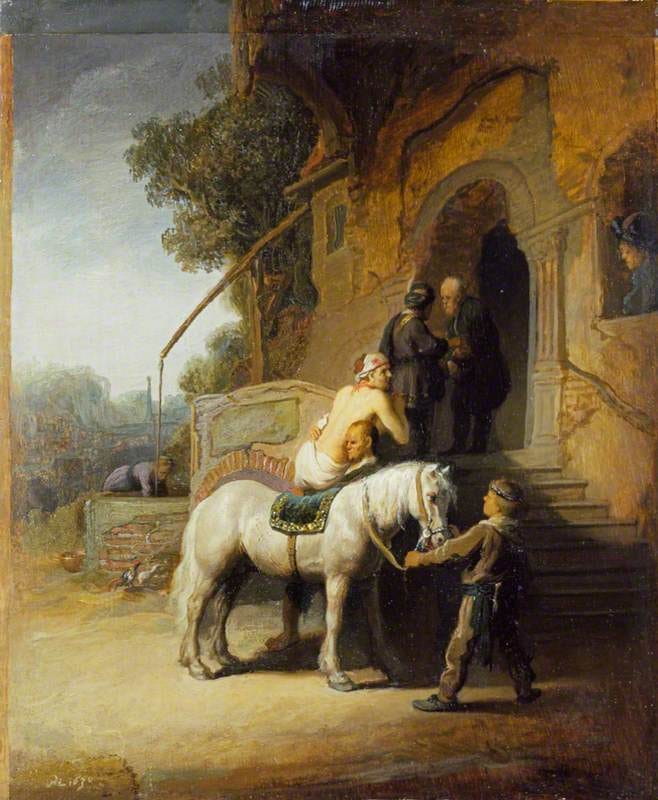
And yet, how often do we treat our ministry like a performance to be critiqued rather than a commandment to be lived? In the simplicity of Luke’s parable of the Good Samaritan, Jesus doesn’t ask about theology or liturgical rubrics. He asks: who acted like a neighbor? Who loved? The priest and Levite passed by. The surprising hero—the outsider—stopped, poured oil and wine, carried the wounded, paid for his hospitality. That Samaritan did for another what good sacred music must do—heal, lift, and bind wounds.
But sacred music hasn’t always done that well. It’s easy to get lost in complexity, in “impressive” arrangements that sound beautiful, but perhaps leave wounds unaddressed. Sacrosanctum Concilium affirms that sacred music must serve the liturgy and promote “full, conscious, and active participation.” It isn’t about show—it’s about encounter, about mercy visibly offered and received.
I have been fortunate enough in life to visit quite a few places of pilgrimage, where centuries of pilgrims carved their petitions into the very fabric of the places they visited. Sometimes when I visit some of these smaller pilgrimage sites, there is no one. Just empty pews and silence. Still, when you enter into these sacred spaces, they have been made holy. And therefore, you can feel intimately why you and so many others have made the journey to that exact spot. It makes me think of St. Augustine’s teaching that the Samaritan is Christ, who binds our wounds —and I realize that silence itself can be as musical as hymnody when it’s infused with mercy.
A quick note on the Samaritan: This was a parable that I grew up with heavily in the protestant church of my upbringing. When I became Catholic, I heard so many new ways to interpret the parable itself. Something we are reminded of often, is the fact that the Samaritans were looked down upon in Jewish society, and therefore, the scholar who asked Jesus this question along with the crowd would have been taken back on the basis that the Samaritan would be the one to stop and help the victim of robbery. I love that in St. Augustine’s reflections, there is a portion where he describes how the word Samaritan, can be translated as guardian, where he gets his idea of the allegory of Christ in the parable.
St. Monica, too—a mother who prayed on the fringes, enduring heartbreak and enduring hope till her son, Augustine, came to the faith. Her quiet faithfulness reminds me that ministry is often unseen, a sacrificial love that does not seek recognition. Intercessory prayer is our wine and oil; patience is our carriage; encouragement is our accommodation.
In Paul’s letter to the Colossians, we see the same inclusivity Paul affirms Christ as the image of the invisible God, reconciling all things through the cross. Music that embraces every voice, every soul, every wounded heart, becomes a reconciling force in troubled times.
So this week, when you plan hymns, think beyond notes. Let the melodies bind wounds. Choose texts that speak mercy. Invite the brokenhearted forward, remind them they belong. Pour oil and wine over hidden wounds—on the lips of a frail voice, on the hands of a grieving widow, on the shoulders of a teenager whose faith is bruised. In that moment, you are the voice of a Good Samaritan, in the house of the Lord.
Remember, ministry isn’t measured in applause. It's measured in lives healed, returns made, hearts bound together. And when the commandment to love God and neighbor is sung with authenticity, it echoes in the hearts of all who listen—and it brings them home.
Inspiration from across the internet.
→ from funeral organist to Oxford to unemployed, a job story
My music of the week.
1) National Anthem at the largest pipe organ in the world!
