

Feast of the Presentation of the Lord
When God Is Carried, Not Controlled
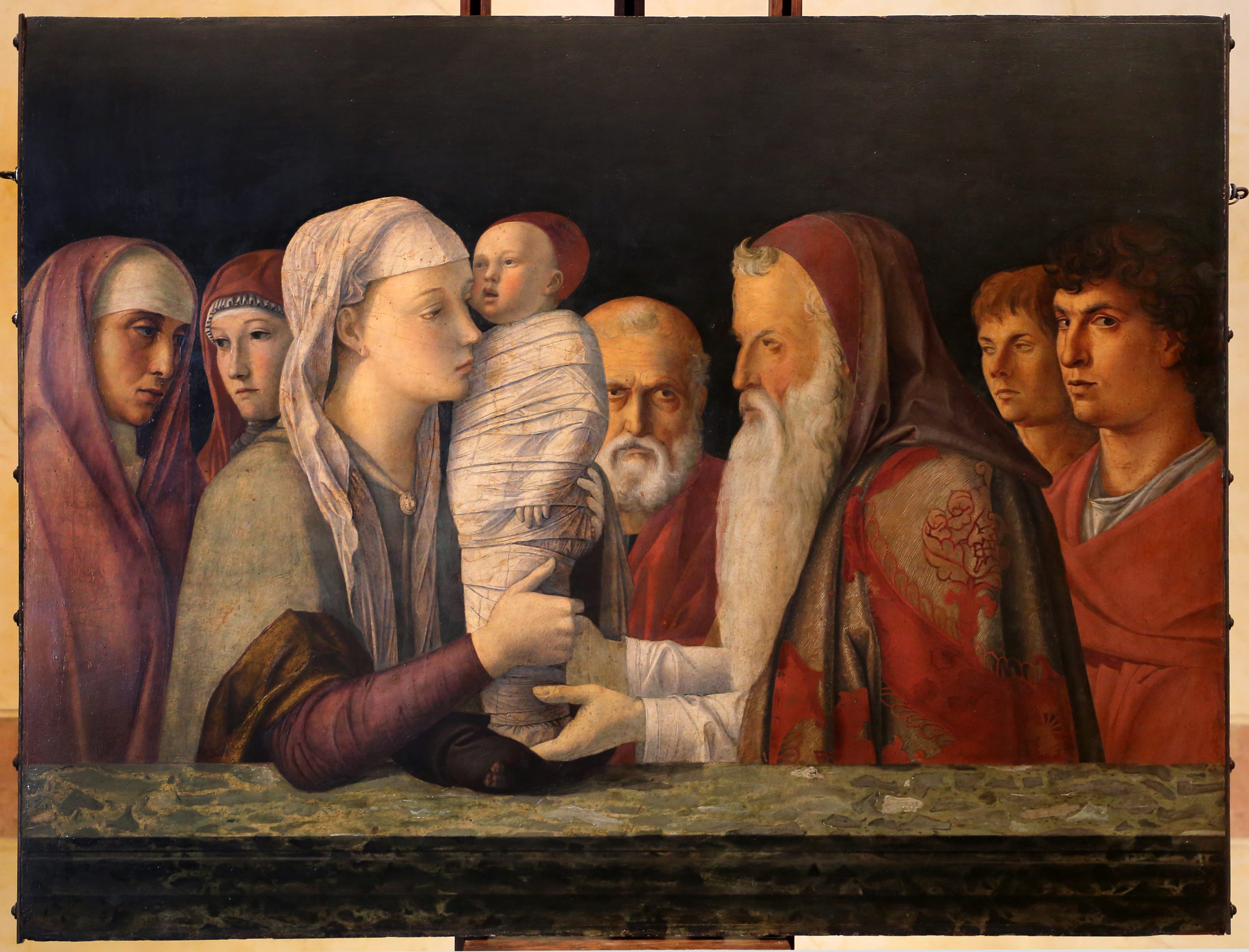
There is something quietly arresting about the fact that the Presentation of the Lord is not driven by urgency—
not by crowds, not by proclamation in the streets, not even by a visible sign of power, but by obedience so ordinary it could easily be overlooked, a young family walking into the Temple not to announce anything new but to submit themselves to what has always been required, carrying with them the Child who is himself the fulfillment of every promise the Temple exists to hold. Mary and Joseph do not bring an explanation, they bring an offering, poor enough to reveal their station and faithful enough to reveal their trust, and in doing so they allow the eternal Word to enter the house of God not with spectacle but with silence, not as conqueror but as gift.
Malachi’s prophecy sharpens the scene by refusing to let us sentimentalize it, reminding us that the coming of the Lord to His Temple is never neutral, never merely consoling, because the One who arrives is also the One who refines, who sits like a refiner of silver and does not leave until what is impure can no longer remain hidden. The messenger prepares the way, yes, but the Lord Himself does the work, and the sons of Levi—those entrusted with sacrifice, with worship, with the daily offering—are the first to be purified, not because they are worst, but because they are closest, because proximity to holiness always increases responsibility rather than diminishing it.
The psalm gives us the Church’s oldest musical response to this moment, a call-and-response that turns architecture into theology and procession into proclamation, lifting gates and ancient doors not because they are insufficient, but because the King of Glory insists on being welcomed consciously, deliberately, sung into the space He already owns. This is not passive praise; it is enacted faith, a people learning how to recognize the Lord not only when He arrives as expected, but when He comes hidden in the arms of the poor, when He asks to be received rather than admired.
Hebrews pulls the veil back even further, insisting that the mystery unfolding in the Temple is not symbolic but costly, that the Child being presented is already moving toward death, already assuming flesh and blood precisely so that fear itself can be broken from the inside, so that priesthood will no longer be defined by distance from suffering but by merciful solidarity with it. Christ does not redeem from above; He redeems by becoming like His brothers and sisters in every way, including vulnerability, including obedience, including the slow rhythm of a life offered before it is fully understood.
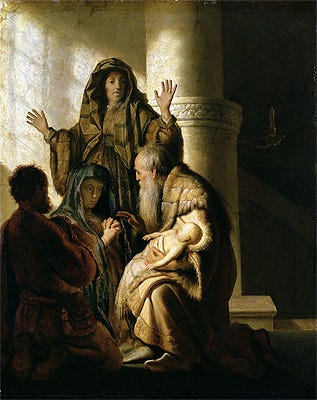
And then Simeon speaks, not as a theologian drafting careful distinctions, but as a man who has waited long enough to recognize fulfillment when it finally rests in his arms, blessing God with words that the Church will later place on her own lips at the close of every day, teaching her to see completion not as control but as consent, not as triumph but as peace. His canticle is not the song of someone who has escaped death, but of someone who no longer fears it, because salvation is not an idea to be defended but a person to be held. Anna follows him, quieter still, doing what prophets have always done best: witnessing faithfully and telling the story to anyone who knows how to wait.
For those entrusted with sacred music and priestly ministry, this feast is both consolation and examination, because it reveals that the deepest work of the liturgy is not amplification but presentation, not self-expression but offering, not filling space but allowing Christ to be recognized when He appears without force. St. Irenaeus wrote that the glory of God is the living human being, fully alive, and yet the Presentation shows us that true life unfolds only when it is first given back to God, when human voice, human art, human ritual become places where Christ is carried rather than displayed.
The Church has never separated this mystery from her musical prayer. Mediator Dei reminds us that liturgical worship is Christ acting through His Body, not individuals performing for an audience, while the General Instruction of the Roman Missal insists that sung prayer must arise from the rite itself, shaped by its action and purpose rather than imposed upon it. In this light, sacred music becomes something profoundly Simeonic: a patient waiting, a disciplined listening, a readiness to sing not when the moment is impressive, but when the Lord is finally, quietly present.
Perhaps this is why Candlemas continues to resist domestication, standing at the threshold between seasons, refusing to let Christmas fade without cost, insisting that light always leads somewhere, that joy is inseparable from sacrifice, and that every genuine offering eventually reveals what the heart is holding. To serve the liturgy on this feast is to stand with Simeon and Anna, not rushing the mystery forward, not clinging to what is familiar, but allowing Christ to be presented again, through obedient ritual and faithful song, so that the thoughts of many hearts—including our own—may finally be revealed.
Ars Musica Sacra is a reader-supported publication. To receive new posts and support our work, consider becoming a free or paid subscriber.
Feast Day Spotlight
Color of Vestments
WhiteLiturgical Note
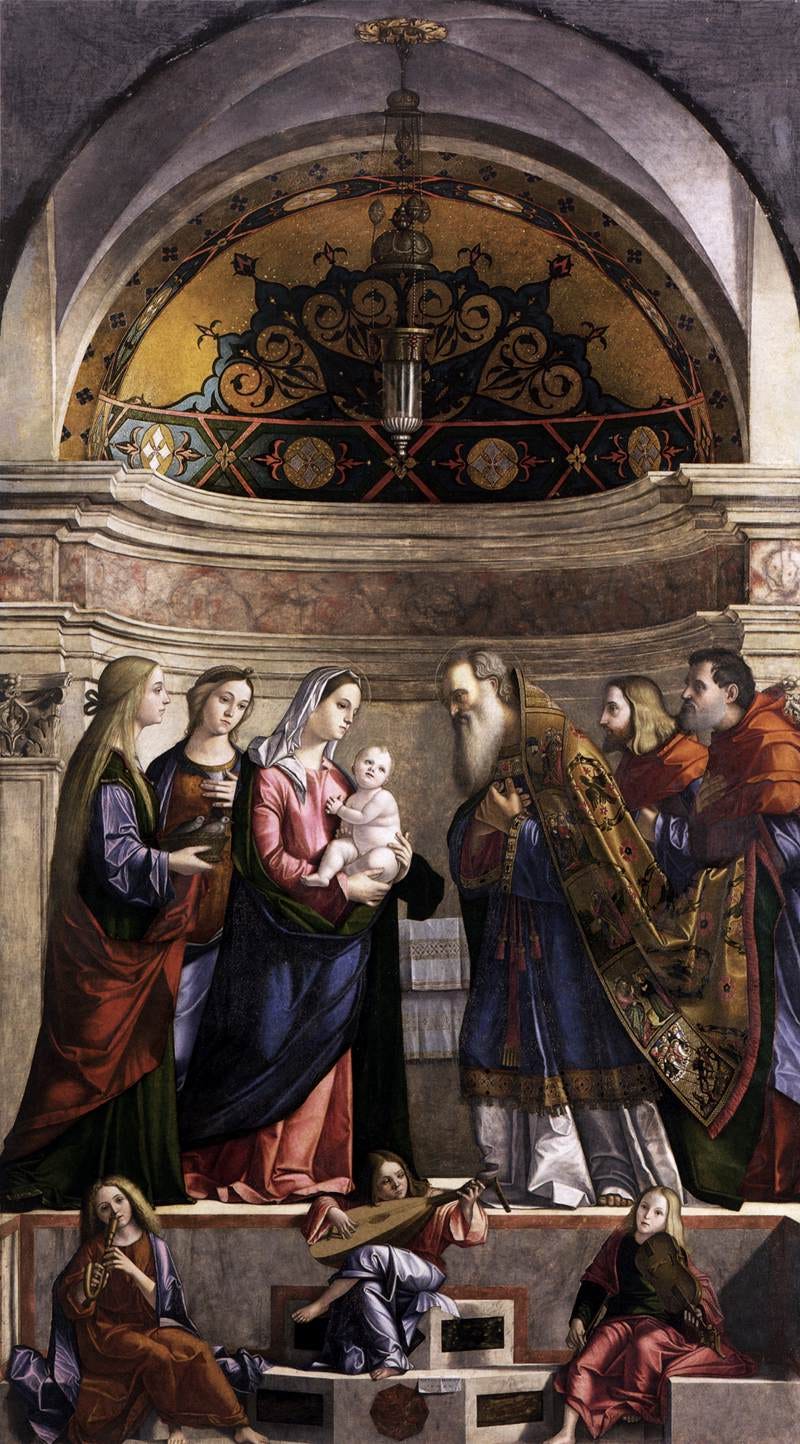
Celebrated forty days after Christmas, the Presentation unites multiple theological threads: Christ’s first entrance into the Temple, Mary’s obedience to the Law, and the public recognition of Jesus as Light for the nations.Historical / Theological Insight
Historically, this feast was marked by candlelight processions as early as the fourth century, emphasizing that Christ is not merely light received, but light carried by the Church into the world. St. Sophronius of Jerusalem preached that in this feast, “we carry lights in procession to show forth the divine light that has appeared,” reminding the faithful that participation, not observation, is the proper posture of worship. The Church’s blessing of candles flows directly from this insight: what Christ reveals must also be borne.Why This Matters for Sacred Music
The feast quietly catechizes ministers into humility, teaching that liturgical beauty exists not to dazzle, but to disclose, not to possess Christ, but to present Him faithfully.
Share these Ars Musica Sacra insights with others for the celebration of this liturgy!
Inspiration from across the internet.
My music of the week.
Two of my favorite settings of the Nunc Dimittis:
Ars Musica Sacra is supported by readers like you. Join our community and engage with other readers by sharing your thoughts and contributing to community discussions!

Have thoughts on what we shared here? Or maybe questions on some liturgy or theology points? Leave a comment and engage with other readers.