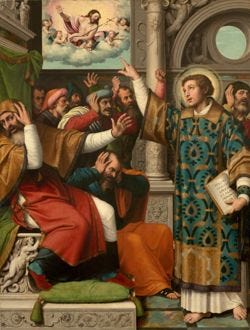
Feast of Saint Stephen, First Martyr
God Refuses to be Silent
Christmastide is upon us!
As we celebrate the Nativity of the Lord, I want to offer my sincere gratitude to each of you who reads, supports, and shares this work. Your attention, encouragement, and commitment to the Church’s musical and liturgical life makes this newsletter possible, and they remind me that formation is never solitary—it is always ecclesial.
If our formation has served you, I invite you to share it with a colleague, a pastor, or a fellow music minister, and, if you are able, to support the work so that this project can continue to grow in depth and reach in the coming year. There is much ahead—more formation, more rooted teaching, and a renewed focus on the beauty and responsibility of sacred music in the life of the Church.
May the newborn Christ, who enters history to redeem it, bless your ministry, your people, and the year to come.
In Christ,
♱ Dane Madrigal
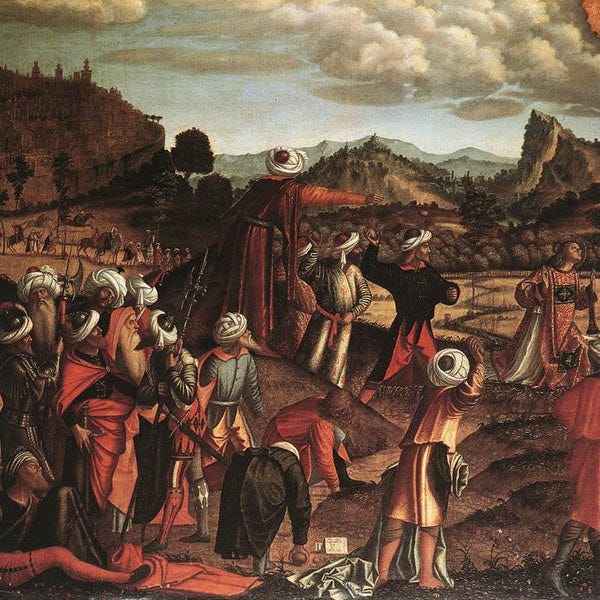
There is something unsettling about the fact that the Church places the Feast of Saint Stephen immediately after Christmas,
as though the liturgy wants to refuse us the comfort of the crèche, insisting instead that the Child in the manger already casts the long shadow of the Cross. The same voice that sings Gloria in excelsis Deo scarcely has time to fade before Stephen stands in Jerusalem, not as a distant historical figure but as a living witness to what it means to let Christ speak through a human life without reservation, without calculation, without retreat.
Stephen does not die because he is reckless, nor because he seeks martyrdom as an achievement; he dies because he sees. Luke is precise about this: filled with the Holy Spirit, Stephen looks intently into heaven and beholds the glory of God, and Jesus standing—not seated—at the right hand of the Father, as though the Son Himself rises to receive the offering of a faithful servant. The violence that follows is not provoked by argument alone but by vision, because Stephen names what he sees, and in doing so he exposes the fault line between a world that can tolerate religious discourse and a world that cannot endure revealed truth. His final prayer echoes the Psalm on his lips and the words Christ Himself spoke from the Cross, Into your hands, O Lord, I commend my spirit, a line that becomes not merely a quotation but a surrender enacted with stones flying and cloaks laid at the feet of Saul, who does not yet know that grace is already moving toward him through the blood of another.
For those entrusted with the Church’s song, this detail matters more than we often admit, because sacred music is never neutral speech. The Responsorial Psalm does not soften Stephen’s fate; it interprets it, allowing the Church to confess trust precisely where safety is absent. To sing this psalm is not to decorate suffering with beauty but to proclaim that faith has a voice even when it is being silenced, that the prayer of Christ continues to pass through the mouths of His Body long after Calvary. The Gospel makes this even more explicit: It will not be you who speak, but the Spirit of your Father speaking through you. Stephen’s martyrdom is the embodied proof that Christ’s promise is not metaphorical. When the Spirit speaks, it may sound like preaching, or silence, or a psalm breathed between blows, but it always sounds like truth.
Church history bears quiet witness to this reality. Before sacred music was theorized, codified, or defended in documents, it was sung by people who knew that fidelity could cost them everything. Tertullian’s insistence that the blood of martyrs is the seed of Christians was not a slogan but an observation, and Stephen’s blood is among the first poured into the soil of the Church. Long before polyphony or notation, the Church learned to sing because it learned to suffer, and the voice of the martyr became the tuning fork by which all later praise would be judged. Music that does not pass through this crucible risks becoming ornamental rather than sacramental, expressive rather than obedient.
This is why the Church has consistently insisted that sacred music be ordered toward truth, prayer, and the sanctification of the faithful rather than toward performance or preference. Musicam Sacram reminds us that liturgical music is meant to foster active participation, not by drawing attention to itself but by allowing the Word to dwell richly among the people, shaping them from the inside. Stephen’s witness reveals what that formation ultimately asks of us: not merely competence, not even beauty, but availability to the Spirit’s voice when it speaks through fragile human means. To sing in the liturgy is to accept that the Word we proclaim may one day ask more of us than breath and pitch, that fidelity cannot always be rehearsed in advance, and that endurance is itself a form of praise.
And yet, there is no bitterness in Stephen’s final moment, no tightening of the soul against those who strike him. Like the Child whose birth we are still celebrating, Stephen entrusts himself completely, forgiving even as he is being undone, allowing his death to become a seed that will one day flower in the conversion of the Church’s greatest missionary. This is the quiet courage the liturgy places before us: not the courage of volume or certainty, but the courage to keep singing the truth when the world covers its ears. For every music minister who has wondered whether their work matters, whether their fidelity is seen, whether the Church’s song still carries weight in a distracted age, Stephen answers without speeches or strategies. He answers by seeing heaven open and by refusing to stop proclaiming what he sees, trusting that the Spirit will complete the phrase long after his own voice has fallen silent.
And so the Church sings again, even here, even now, because the song does not belong to us. It belongs to the One who stands to receive it.
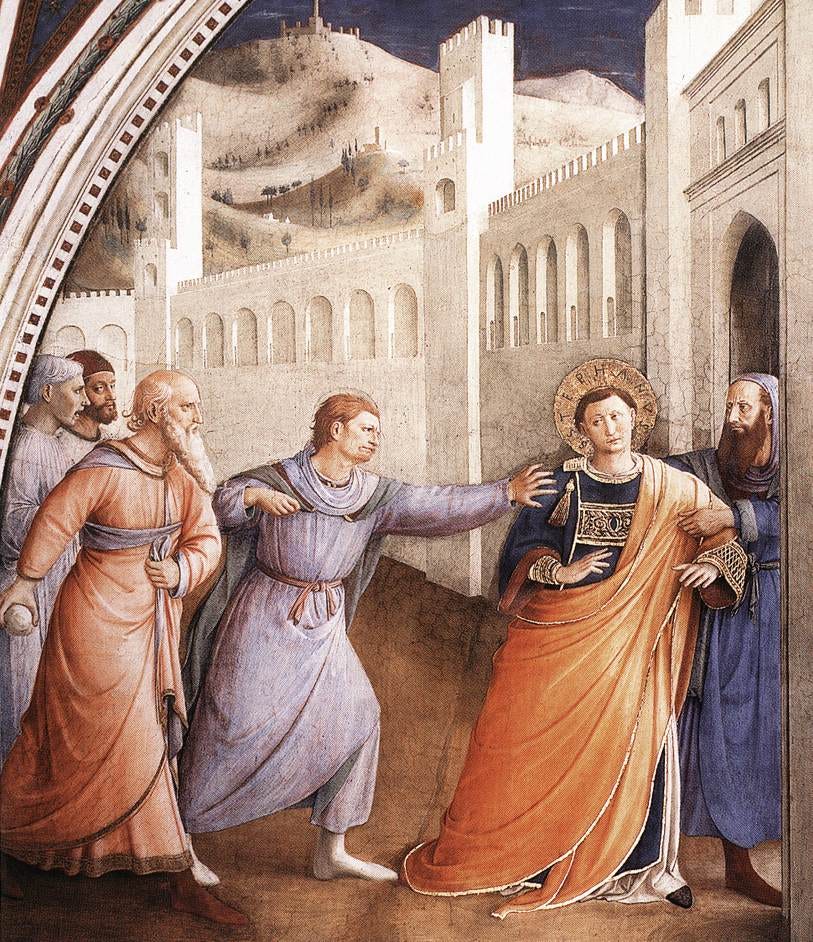
Feast Day Spotlight
Color of Vestments
RedLiturgical Note
The Feast of Saint Stephen, celebrated on December 26, stands deliberately within the Octave of Christmas, reminding the Church that the Incarnation is not merely a tender mystery but a dangerous one, a truth so real that it provokes resistance. Stephen’s martyrdom reveals that the Child laid in the manger is already the risen Lord whom heaven acknowledges, even when earth rejects Him. The Church Fathers often noted that Stephen is crowned not after Christ’s Resurrection chronologically, but after His Nativity liturgically, because martyrdom is the first full human response to the Word made flesh.Historical / Theological Insight
Theologically, Stephen embodies what the Second Vatican Council would later articulate when it taught that the liturgy is the “source and summit” of the Church’s life (Sacrosanctum Concilium), for Stephen’s final act is itself liturgical: a prayer of commendation offered in union with Christ’s own sacrifice. Saint Augustine preached that Stephen “saw Christ standing, as if ready to help His athlete,” emphasizing that heaven does not observe martyrdom from a distance but receives it as worship.Why This Matters for Sacred Music
For those who serve the Church’s song, Stephen stands as a reminder that sacred music is never detached from witness. When the Church sings truthfully, she risks misunderstanding, resistance, even rejection, yet she sings anyway because the Spirit continues to speak through human voices willing to be given. In Stephen, the Church learns again that fidelity precedes fruit, and that every true act of praise participates in the same offering that opened the heavens.
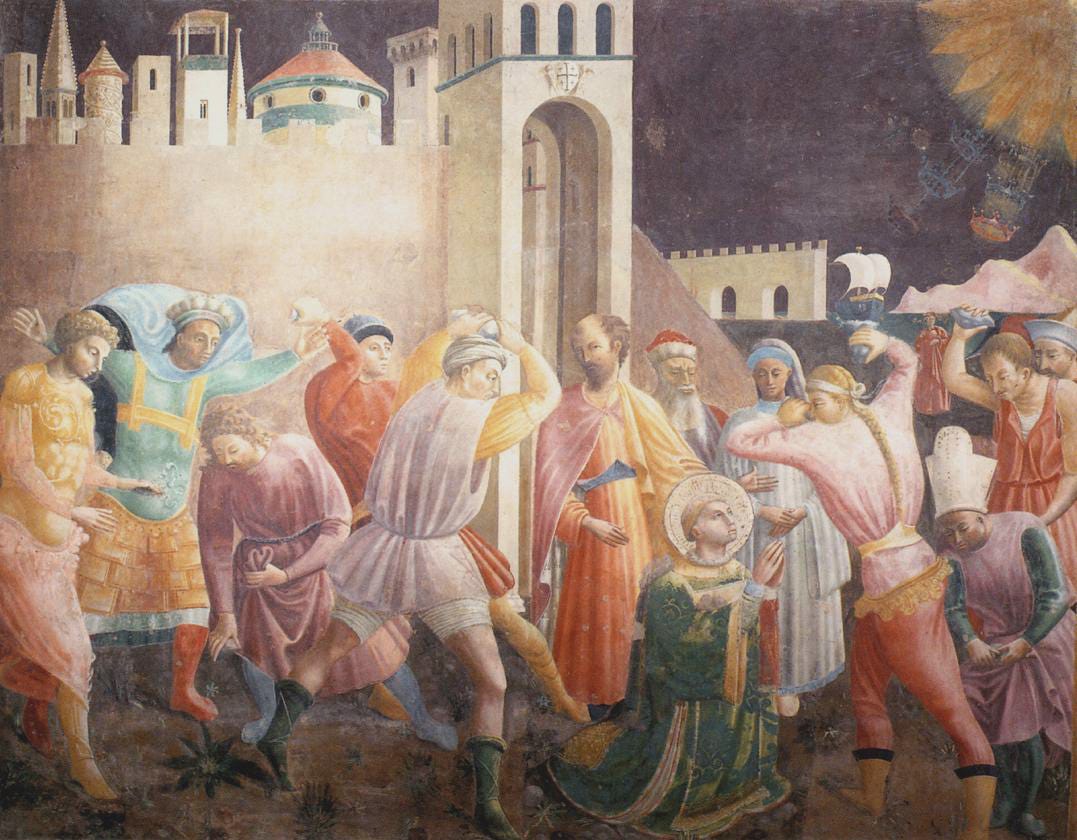
Inspiration from across the internet.
My music of the week.
1) not completely sure why, but this hymn has always reminded me of this great feast of witness