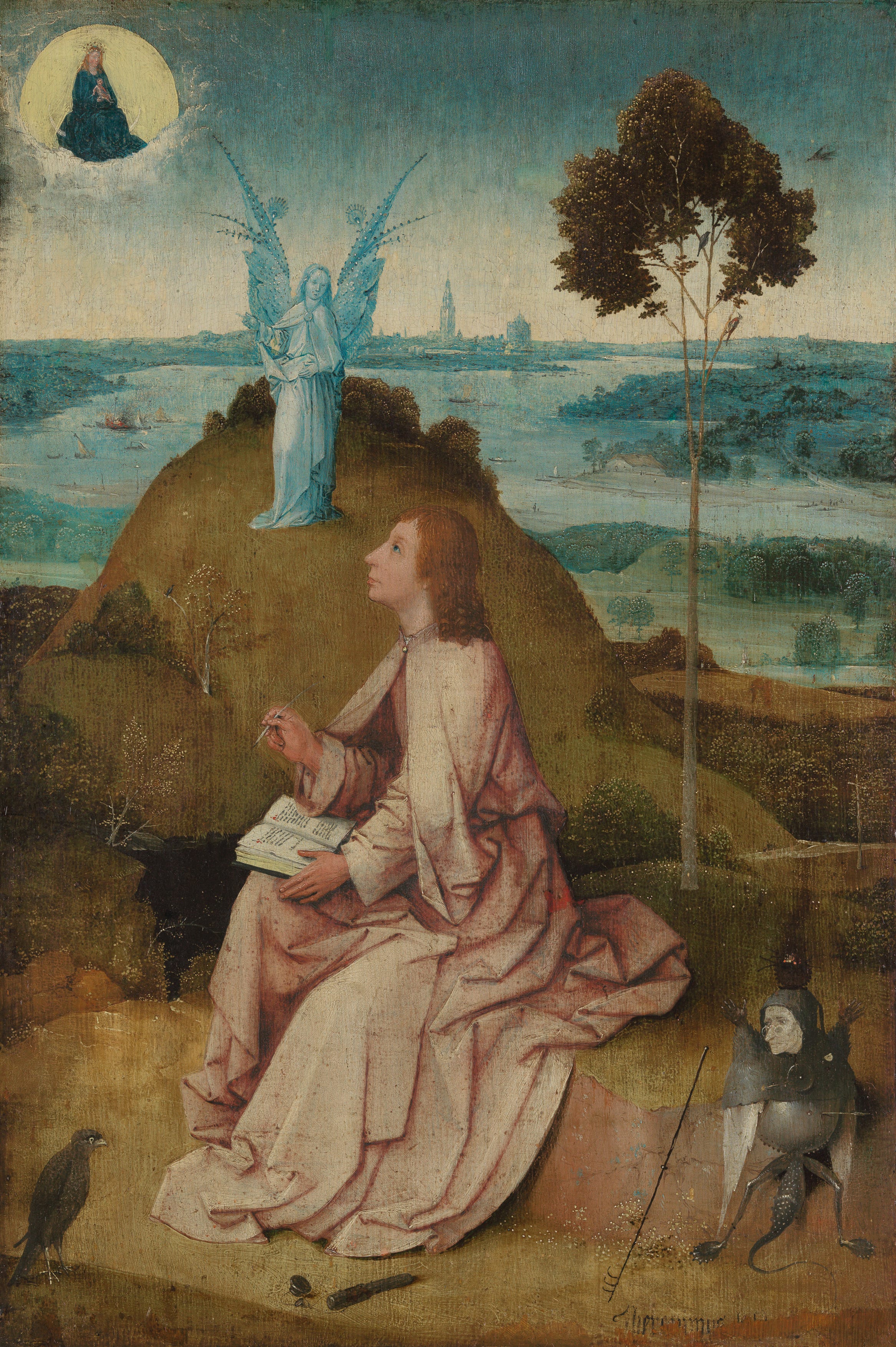
Feast of Saint John, Apostle and Evangelist
He Saw and Believed: When Love Learns How to Wait for the Truth
Christmastide is upon us!
As we celebrate the Nativity of the Lord, I want to offer my sincere gratitude to each of you who reads, supports, and shares this work. Your attention, encouragement, and commitment to the Church’s musical and liturgical life makes this newsletter possible, and they remind me that formation is never solitary—it is always ecclesial.
If our formation has served you, I invite you to share it with a colleague, a pastor, or a fellow music minister, and, if you are able, to support the work so that this project can continue to grow in depth and reach in the coming year. There is much ahead—more formation, more rooted teaching, and a renewed focus on the beauty and responsibility of sacred music in the life of the Church.
May the newborn Christ, who enters history to redeem it, bless your ministry, your people, and the year to come.
In Christ,
♱ Dane Madrigal

There is something quietly demanding about the way Saint John speaks to us on the day the Church gives him her full attention,
because he does not argue for the truth of Christ so much as he remembers it aloud, lingering over the weight of what has been heard, seen, contemplated, and touched, as though faith itself were something that leaves a physical imprint on the body. John does not begin with abstraction or doctrine, but with memory that has passed through the senses and settled into conviction, and in doing so he reminds us that Christianity is not first an idea to be explained but a life that insists on being encountered, again and again, until joy becomes complete not by possession but by communion.
This insistence on concreteness shapes everything else we hear. The Word of life is not merely spoken but made visible, and John’s witness rests on the astonishing claim that eternity allowed itself to be handled, that the infinite accepted the vulnerability of nearness, and that revelation came not as thunder but as a Presence willing to be known over time. Even decades after the Resurrection, John writes as someone still astonished by proximity, as though the central miracle were not only that Christ rose from the dead but that He ever allowed Himself to be so close in the first place. For a Church tempted to treat mystery as something to manage or explain away, John quietly resists us, insisting that the foundation of faith is not mastery but fellowship, a shared participation in the life of the Father and the Son that cannot be reduced without being diminished.
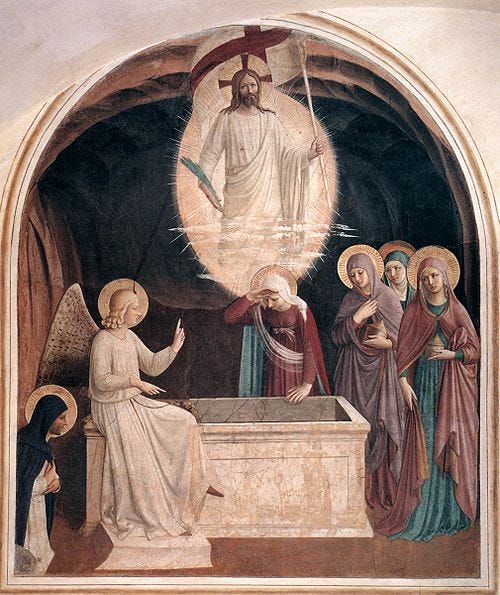
The Gospel scene mirrors this same restraint. John runs faster than Peter, yet he does not rush past understanding; he arrives first, sees the signs, and waits, allowing the moment to unfold rather than forcing it into clarity. When he finally enters the tomb, the text is almost unbearably spare: he saw and he believed. No speech, no argument, no explanation, just recognition born of love that had already learned how to wait. The beloved disciple’s faith does not erupt from spectacle but from attentiveness, from a heart trained to notice meaning even in absence, which is perhaps why John alone among the Apostles can stand at the foot of the Cross and remain there, receiving silence without fleeing it.
The psalm places this posture within the wider horizon of praise, proclaiming that the Lord reigns even when clouds and darkness surround Him, that justice and judgment form the hidden architecture of His throne, and that light dawns not for those who grasp but for those who remain upright of heart. This is not naïve optimism but mature rejoicing, the kind that can sing because it knows that glory often announces itself indirectly, through order, restraint, and fidelity rather than through force. For those who serve the Church’s liturgy, this matters deeply, because sacred music is called to cultivate precisely this kind of seeing, a seeing that does not demand immediate emotional payoff but forms the soul slowly, patiently, until belief emerges not as reaction but as response.
Church history bears this out with remarkable consistency. Saint John’s Gospel would become the Church’s primary school of contemplation, shaping monastic prayer, mystical theology, and the Church’s understanding of Word and sacrament as inseparable encounters rather than parallel tracks. It is no accident that the Prologue of John’s Gospel stands at the heart of so many liturgical moments, because it teaches the Church how to listen before it teaches her what to say. Long before later debates about style or form, the Church learned from John that reverence begins with receptivity, and that the most truthful proclamation is one that allows the mystery to remain larger than the one who proclaims it.
The Church’s teaching on sacred music reflects this same logic. Divini Cultus insists that liturgical music must spring from the Church’s interior life and lead the faithful into prayer rather than distraction, because sound that overwhelms contemplation ultimately obscures the Word it claims to serve. For music ministers, this can be both a consolation and a correction, especially in a culture that prizes immediacy and visibility, because John’s witness suggests that the most fruitful ministry may be the one that teaches people how to wait in the presence of God, how to listen until belief takes root quietly, almost imperceptibly, and how to rejoice without needing to explain why.
Perhaps this is why the Church places Saint John so close to Christmas, as though to remind us that the tenderness of the Incarnation is not opposed to depth but is its gateway. John leaned on the Lord’s breast at the Last Supper not because he understood everything, but because he trusted the One who did, and that posture of closeness would later become the lens through which he interpreted empty tombs, rolled cloths, and the strange, luminous space where absence gives way to faith. For every priest or music minister who has wondered whether attentiveness still matters, whether quiet fidelity still bears fruit, John offers a gentle but unwavering answer: belief grows where love learns to stay, and joy becomes complete not when mystery is solved, but when it is received.
And maybe that is the invitation of this feast, to let our ministry sound a little more like listening, to let our singing leave room for recognition, and to trust that when the Church runs toward the mystery with love rather than control, she will find that belief has already been waiting for her inside the silence.
Feast Day Spotlight
Color of Vestments
WhiteLiturgical Note
The Feast of Saint John, celebrated on December 27 within the Octave of Christmas, holds a unique place in the liturgical year, because John alone among the Apostles is traditionally understood to have died a natural death, bearing witness not through martyrdom of blood but through martyrdom of fidelity. His presence within the Christmas octave reminds the Church that intimacy with Christ is itself a form of heroic holiness, one that endures through memory, contemplation, and long obedience rather than through a single dramatic moment.Historical / Theological Insight
Historically, the Church has seen in John the model of the contemplative apostle, whose theology flows from proximity rather than speculation. Saint Jerome remarked that John’s writings were composed “from the heart of Christ,” a phrase that shaped centuries of reflection on the relationship between love and knowledge in the Christian life. Theologically, John embodies what the Church would later articulate in Dei Verbum, which teaches that divine revelation is communicated through deeds and words intimately connected, inviting the faithful not merely to information but to relationship.Why This Matters for Sacred Music
For the Church’s musicians and ministers of the Word, Saint John stands as a patron of reverent proclamation, reminding us that the deepest truths of the faith are often communicated not by volume or complexity, but by clarity born of closeness. In a season overflowing with sound and activity, his feast quietly insists that the Church’s song must always emerge from listening, lest it forget the Voice it exists to serve.

Inspiration from across the internet.
→ learn a little about the saint that we celebrate today
My music of the week.
1) I found this hymn for the feast, and really I think that it is a great composition!